











19
How to Choose the Best Kitchen Floor Tiles
Choosing the right kitchen tiles means balancing durability, easy maintenance, moisture resistance, safety and design. For kitchen floors, vitrified and porcelain tiles are popular choices, while ceramic tiles can also be suitable depending on the application. The right tile size, colour and finish depend on your kitchen layout, usage and design preferences.
In this guide, learn how to choose the best kitchen floor tiles, compare popular tile materials, and find the right options for your kitchen based on durability, maintenance, safety and style.
Factors to Consider When Choosing Kitchen Floor Tiles
From color to materials there are several things you have to consider to choose the best kitchen floor tiles for you. Let’s discuss them in detail.
1. Understand Your Needs
Before choosing tiles for kitchen floors, consider how often the kitchen is used, the amount of foot traffic, exposure to spills and the level of maintenance you are comfortable with. You should also consider your overall flooring budget. Read our guide to Cost of Tiling Per Sq Ft in India to compare tile and installation costs before making your choice.
- Durability: Kitchens are one of the busiest places in the home, where families spend considerable time. That means floor tiles have to withstand considerable footfall. So, if you have a busy household with kids and pets, choose tiles that are strong enough to withstand heavy foot traffic and resist scratches.
- Water Resistance: Kitchens see considerable use of water for cleaning activities, which makes them prone to spills and moisture. Spills can cause accidents, and seepage of water through tiles can compromise the structural integrity of a place. So, choose water-resistant to maintain a clean and safe environment.
- Ease of Maintenance: Some tiles require more upkeep than others. If you are looking for a low-maintenance option, choose kitchen tiles that are easy to clean and resistant to stains.
Which Tiles Are Good for Kitchen Floors?
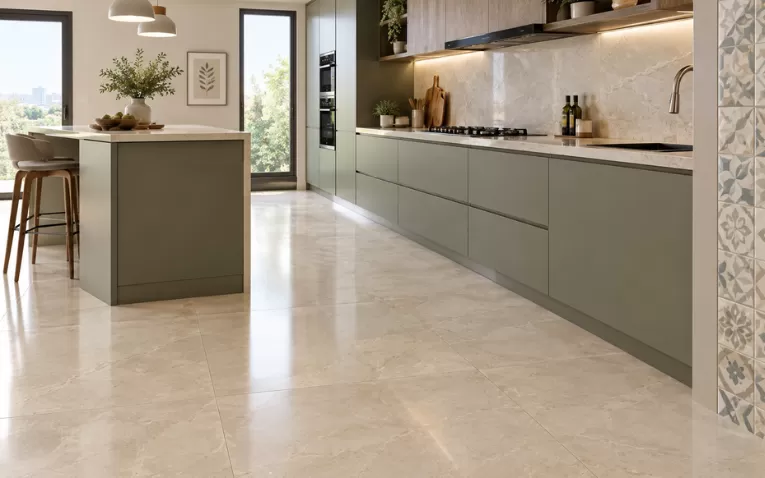
The best tiles for kitchen floors should offer durability, easy maintenance, moisture resistance and a suitable level of slip resistance. Vitrified and porcelain tiles are commonly considered for kitchen floors because of their strength and low-maintenance properties. Ceramic tiles can also be suitable depending on the application, while the finish and surface texture should be selected according to the kitchen’s usage and exposure to spills.
If you are comparing ceramic and porcelain options, read our guide to ceramic vs porcelain tiles for kitchen floors to understand their key differences and choose a suitable option for your kitchen.
If you are looking for recommended tiles for kitchen, compare the material, finish, size, colour and maintenance requirements before making your choice.
| Tile Type | Why It Works for a Kitchen | Suitable Use |
|---|---|---|
| Vitrified Tiles | Durable, low maintenance and available in many designs | Kitchen floors |
| Porcelain Tiles | Dense, durable and resistant to moisture and stains | High-use kitchen floors |
| Ceramic Tiles | Versatile, easy to maintain and available in many designs | Floors, walls and backsplashes depending on product |
| Natural Stone | Distinctive appearance and premium look | Kitchens where regular maintenance is acceptable |
Best Kitchen Tile Materials: Which One Should You Choose?
Different kitchen tiles offer different levels of durability, maintenance and design flexibility. The right material depends on whether you are selecting tiles for the floor, wall or backsplash and how heavily the kitchen is used.
1. Ceramic Tiles
They are a popular choice among homeowners for kitchens due to their qualities like durability, water resistance, and versatility in design. Additionally, they come in various colors, patterns, and finishes which will help you in creating a unique look that complements your kitchen decor. Also, ceramic tiles are relatively easy to clean and maintain.
2. Porcelain Tiles
A type of ceramic, porcelain tiles are denser and more durable than standard ceramic tiles, making them a great choice for high-traffic areas like kitchens. They are highly resistant to moisture and stains, which makes them ideal for areas prone to spills. Porcelain tiles also come in a variety of styles, including those that mimic natural stone or wood.
3. Natural Stone Tiles
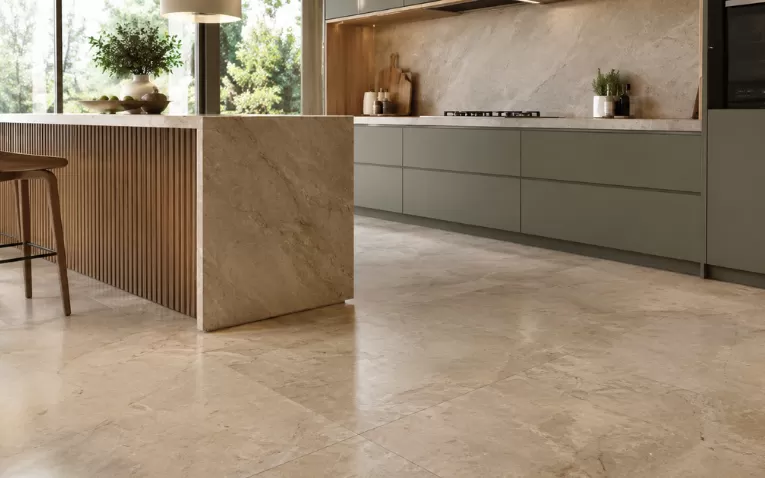
Those who want to elevate kitchen design with luxurious looks,natural stone tiles, such as granite, marble, or slate, can be a great option for them. But there is a catch. While they are beautiful and unique, natural stone requires regular sealing to protect against moisture and stains. If you choose natural stone tiles, be prepared for extra efforts and expenditure for maintenance.
4. Vitrified Tiles
Vitrified tiles are a popular option for kitchen floors because they are durable, have low water absorption and are relatively easy to maintain. They are available in a wide range of colours, patterns and finishes, making them suitable for both practical and design-focused kitchen tiles. For areas exposed to frequent spills and heavy foot traffic, choose a vitrified tile with a finish appropriate for floor use.
Choose the Right Kitchen Tile Size and Layout
The size of your kitchen floor tiles and wall tiles can influence the overall look and feel of your kitchen. Larger tiles can make a smaller kitchen feel more spacious by reducing the number of grout lines. However, smaller tiles can add visual interest and detail in larger spaces. When planning kitchen floor tile layout, consider the following factors:
Large-format tiles can make a smaller kitchen feel more open by reducing the number of grout lines, while smaller tiles can introduce more detail and pattern. Choose the size according to the kitchen dimensions, layout and overall kitchen tiles design.
- Patterns: Patterns on the floor not just add visual interest but also can make a kitchen space appear wider or smaller. So, experiment with different patterns such as herringbone or diagonal layouts to add character and depth to your kitchen.
- Grout Lines: The width of grout lines can impact the overall look of your tiled surface. Wider grout lines tend to give a more rustic, traditional feel, while narrower grout lines create a sleek and modern aesthetic. Choosing the right width for floor tiles can help enhance the style you want to achieve in your kitchen.
- Transition Areas: If your kitchen connects to other areas of your home, such as the dining or living room, consider how the tiles will transition between these spaces. A cohesive design across connected rooms enhances the overall aesthetic, so choose tiles that complement the style and colors of the adjoining areas for a seamless look.
What Size Tiles Are Best for a Kitchen Floor?
There is no single best tile size for every kitchen. Large-format tiles can create a more seamless appearance with fewer grout lines, while smaller formats can work well for detailed layouts. Consider the kitchen dimensions, furniture placement and desired kitchen tiles design before selecting a size. For accurate tile quantity planning, learn how to calculate the number of tiles based on your room area and tile size.
Choose Kitchen Tile Colours and Patterns Wisely
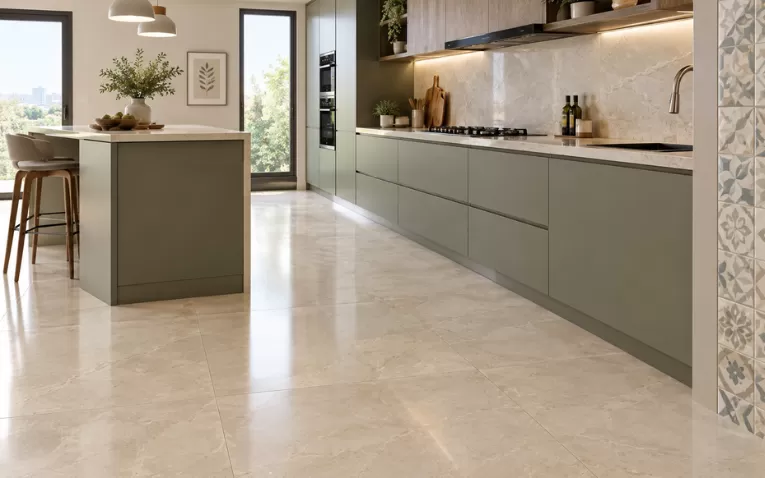
The colour and pattern of your kitchen tiles can significantly influence the appearance and feel of the space.
For a smaller kitchen, lighter colours can help create a brighter and more open appearance. Grey, beige, cream and other neutral shades can also provide a versatile base for different kitchen tile design styles. Learn more about the best floor tile colours before making your selection.
- Light Colors: Light-colored tiles tend to give a small kitchen a more open and airy look while reflecting natural light.
- Dark Colors: Darker tiles add warmth and sophistication to the kitchen but show dust or stains more easily. The same consideration applies to kitchen wall tiles. Darker colours can make dust, stains and water marks more noticeable, so consider the kitchen’s cleaning requirements before choosing them.
- Patterns: Consider incorporating patterned tiles as accents or borders to create focal points in your kitchen design. Using these tiles strategically can add visual interest and personality, helping to define specific areas or highlight features like backsplashes and islands.
Prioritize Safety Features
Safety is particularly important when choosing kitchen floor tiles because water, oil and other spills can make surfaces slippery. Look for floor tiles with a suitable slip-resistant surface and check the manufacturer’s product specifications before selecting a tile for your kitchen.
Best Kitchen Floor Tiles for Different Needs
| Kitchen Requirement | Tile Option to Consider |
|---|---|
| Heavy daily use | Vitrified or porcelain tiles |
| Easy maintenance | Vitrified or porcelain tiles |
| Premium appearance | Natural stone or stone-look tiles |
| Modern kitchen design | Large-format vitrified or porcelain tiles |
| Smaller kitchen | Light-coloured, larger-format tiles |
| Frequent spills | Suitable low-porosity floor tiles with an appropriate finish |
| Design flexibility | Ceramic, vitrified or porcelain tiles |
The best choice depends on your kitchen’s usage, layout, maintenance requirements and design preferences rather than one tile type being suitable for every kitchen.
Test Samples Before Selecting
Once you’ve narrowed down your choices, it’s advisable to test samples before making a final decision. Take home several tile samples and place them in your kitchen space to see how they compliment the look of your kitchen cabinets, walls, countertops, and lighting conditions throughout the day.
Consult Professionals
Even after considering all the factors we have stated above, if you’re still feeling confused by how to choose the right tiles brand or if you are still unsure which kitchen tiles are suitable for your floor, an interior designer, tile professional or flooring specialist can help you compare material, size, finish and layout options. They can offer you valuable insights based on their experience working with different clients and spaces and help you make informed decisions suited to your specific needs.
Conclusion
Choosing the best kitchen floor tiles depends on your kitchen’s usage, durability requirements, maintenance needs, safety, size, colour and overall design. Vitrified and porcelain tiles are popular choices for kitchen floors, while ceramic tiles can also work well depending on the application. Before making a final decision, consider the tile material, finish, size and suitability for your kitchen space.
For durable and stylish kitchen tiles, Spenza Ceramics offers a wide range of designs, sizes and finishes for different kitchen requirements. As an established tiles company in India, Spenza Ceramics focuses on providing tile solutions for modern homes and commercial spaces. If you are looking for the best tiles company in India, compare tile quality, design, durability and suitability for your space before making your choice.
Related Blogs

What Is the Best Bathroom Tile Colour? 15 Stylish Ideas
Read Now →
Small Living Room Ideas: How Can You Make Your Space Look Bigger?
Read Now →
Home Flooring Tiles Design: 15 Modern Ideas for Every Room
Read Now →
Marble and Granite Difference: Find the Best for Your Home
Read Now →Discover The Latest Kitchen Tile Innovation
Encourage users to explore or contact for bulk/dealer inquiries
View TileFrequently Asked Questions About Kitchen Floor Tiles
Get quick answers about the best kitchen floor tiles, including materials, sizes, colours and finishes to help you choose the right tiles..Latest Blogs
Explore—and shop—these real-life spaces.
What Is the Best Bathroom Tile Colour? 15 Stylish Ideas
Choosing the right bathroom tile colour can make a significant difference to the appearance and....
Small Living Room Ideas: How Can You Make Your Space Look Bigger?
Small living room ideas can help you create a brighter, more open, and comfortable space....
Home Flooring Tiles Design: 15 Modern Ideas for Every Room
The best home flooring tiles design combines visual appeal, durability, easy maintenance and suitability for....