








29
Which Pooja Room Tiles Design Is Best? 10 Beautiful Ideas with Vastu Tips
White marble-look, ceramic and porcelain tiles are popular choices for a pooja room because they offer an elegant appearance, easy maintenance and versatile design options. The best pooja room tiles design depends on your mandir size, preferred interior style, flooring safety and traditional Vastu preferences.
From decorative wall tiles and golden borders to wooden-look finishes and floral patterns, the right tiles can transform a simple prayer corner into a beautiful and peaceful space.
In Indian homes, Vastu Shastra also influences pooja room design. White, cream and light yellow shades are commonly preferred, while the north-east direction is traditionally considered favourable for a prayer space.
Explore these 10 beautiful pooja room tiles design ideas, along with Vastu tips and practical tile-selection advice, to find a suitable style for your home. You can also explore our guide on Vastu for Home for more ideas on creating a positive living environment.
Which Pooja Room Tiles Design Ideas Can Make Your Mandir Beautiful?
White marble, marble-look tiles, decorative floral patterns, wooden-look finishes and Om-themed tiles are popular choices for pooja rooms. Traditional mandirs often feature natural marble, marble-look surfaces and golden borders, while geometric and textured tiles complement contemporary interiors.
Here are 10 attractive pooja room wall tiles design ideas that combine traditional aesthetics with modern interior styles.
1. White Marble-Look Tiles for an Elegant Mandir
White marble-look tiles create a clean and sophisticated appearance in a pooja room. Their subtle grey veins add natural-looking texture without making the space appear busy.
Choose large-format marble-look tiles for the backdrop wall and pair them with white or cream surroundings. This combination works particularly well in both compact mandir corners and dedicated prayer rooms.
2. Golden Border Pooja Room Wall Tiles Design
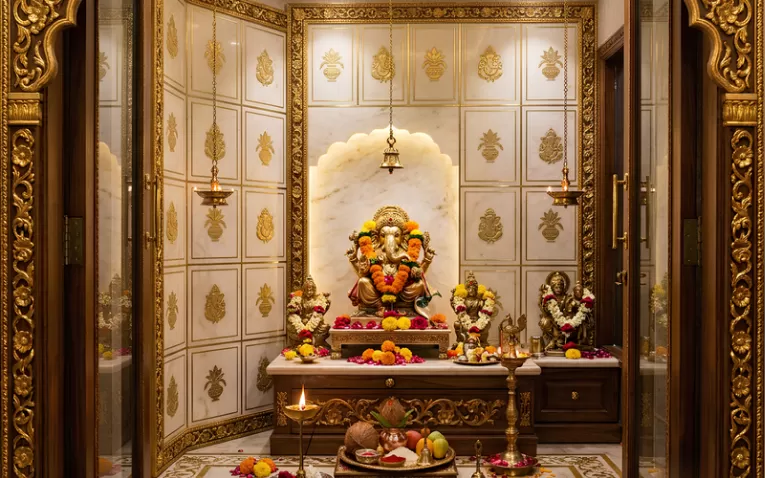
Golden borders add a traditional and decorative touch to mandir interiors. Combine slim golden strips with white marble-look tiles to create an elegant background for your idols.
You can also use gold-finish decorative accents around a central tile panel. Pair them with warm lighting and brass accessories for a coordinated traditional appearance.
3. Wooden-Look Tiles for a Traditional Feel
Wooden-look tiles bring warmth and natural beauty into your prayer space. Brown, walnut and light oak shades complement traditional mandir furniture and decorative brass elements.
Use wooden-look tiles on the backdrop wall and pair them with cream flooring. For compact pooja rooms, lighter wood shades can help maintain a bright and open appearance.
4. Om and Religious Symbol Tiles
Tiles featuring Om, lotus and other devotional motifs create a meaningful focal point behind the deity. Choose a decorative panel with a light background and simple surrounding tiles.
A single symbolic feature panel can make the mandir visually attractive without overwhelming the prayer area. White, cream and light gold combinations work particularly well with traditional interiors.
5. Floral and Decorative Wall Tiles
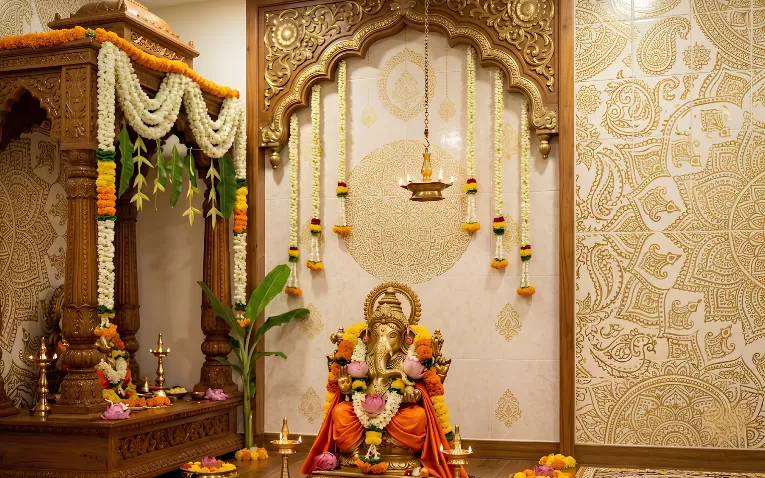
Floral patterns add elegance and decorative detail to prayer spaces. Choose lotus-inspired designs or delicate traditional motifs in white, beige and light gold.
Use patterned tiles on one wall behind the idols while keeping the remaining surfaces simple. This creates a balanced appearance and prevents the mandir from looking overcrowded.
6. 3D Textured Tiles for a Modern Mandir
3D tiles introduce depth through raised patterns, geometric shapes and wave-like textures. White, ivory and light beige finishes work particularly well in contemporary homes.
Consider using textured tiles on the main backdrop wall with subtle lighting to highlight their patterns. Avoid overly complicated designs in small prayer corners because they can make the area feel visually crowded.
7. Beige and Cream Tiles for a Peaceful Space
Beige and cream shades create a warm and soothing atmosphere. These neutral colours are easy to coordinate with wooden shelves, brass accessories and traditional decorative elements.
Choose cream wall tiles with beige flooring for a coordinated look. This combination is suitable for homeowners who prefer understated and timeless mandir interiors.
8. Printed Tiles with Temple Designs
Printed tiles featuring temple arches, traditional artwork and spiritual illustrations can give your mandir a distinctive appearance.
Use one decorative panel behind the idols and complement it with plain tiles in matching shades. Temple-inspired prints work especially well in traditional prayer rooms where decorative details are an important part of the interior.
9. Geometric Tiles for a Contemporary Pooja Room
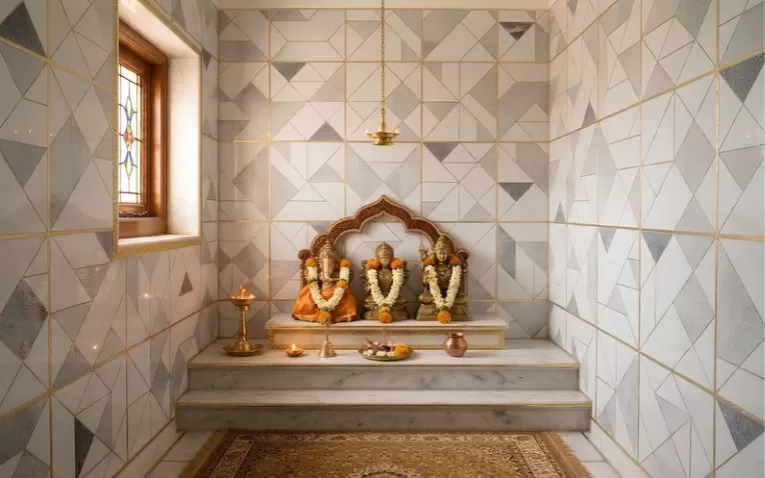
Geometric tiles offer a modern alternative to traditional patterns. Symmetrical designs, subtle lines and light colours can make a compact mandir look stylish.
Choose soft geometric patterns in white, beige or cream and pair them with minimal mandir furniture. This approach creates a contemporary prayer space without losing its peaceful appearance.
10. Marble-Look Floor Tiles with Decorative Wall Tiles
Combine simple marble-look floor tiles with decorative wall tiles to create a balanced mandir interior. Choose a matte or appropriately slip-resistant floor finish for better grip and a patterned or glossy wall finish for visual appeal.
This combination allows the backdrop wall to become the main attraction while keeping the flooring practical and easy to maintain.
Which Colours Are Best for Pooja Room Tiles as per Vastu?
According to traditional Vastu beliefs, light and soothing colours are preferred for prayer spaces because they create a peaceful and welcoming atmosphere.
Here are some commonly selected colours for pooja room wall tiles:
| Tile Colour | Suggested Appearance |
|---|---|
| White | Clean, bright and peaceful |
| Cream | Warm and elegant |
| Light Yellow | Traditional and welcoming |
| Beige | Subtle and natural |
| Light Pink | Soft and decorative |
| Light Blue | Calm and refreshing |
White, cream and light yellow are popular choices for pooja room wall tiles. These shades also complement marble-look surfaces, wooden mandir furniture and traditional brass accessories.
For a balanced appearance, consider combining one light-coloured backdrop with simple flooring rather than using several contrasting colours.
Which Direction Is Best for a Pooja Room as per Vastu?
According to commonly followed Vastu principles, the north-east direction is considered favourable for placing a pooja room. East and north are also commonly preferred directions.
Consider these traditional guidelines when planning your mandir:
- North-East: Traditionally considered the preferred direction for a pooja room.
- East: Commonly selected for morning prayers and natural light.
- North: Another direction often recommended for a prayer space.
- Idol placement: Traditionally, idols are positioned with consideration for the devotee’s direction while praying. Follow the placement guidelines of your preferred Vastu tradition.
- Clean surroundings: Keep the mandir organised, uncluttered and separate from unsuitable storage areas.
Vastu recommendations are traditional beliefs and should be considered alongside your home’s layout, ventilation and practical requirements.
If you are also planning other rooms according to Vastu, read our detailed guide on the best kitchen direction as per Vastu.
Which Types of Tiles Are Best for a Pooja Room?
Which Types of Tiles Are Best for a Pooja Room?
Different tile materials offer different benefits. The right selection depends on the location, design, maintenance requirements and available budget.
| Tile Type | Main Benefit | Suitable Application |
|---|---|---|
| Ceramic Tiles | Versatile and easy to maintain | Wall tiles |
| Porcelain Tiles | Durable and low water absorption | Floors and walls |
| Vitrified Tiles | Durable and low porosity | Flooring |
| Marble-Look Tiles | Elegant decorative appearance | Walls and floors |
| Wooden-Look Tiles | Warm and natural appearance | Feature walls |
| Slip-Resistant Tiles | Improved floor grip | Pooja room flooring |
Marble-look and wooden-look describe decorative finishes rather than separate material categories. These designs are available in different tile materials and finishes.
For walls, decorative ceramic and porcelain tiles offer several design possibilities. For floors, prioritise durability, ease of cleaning and suitable slip resistance.
Explore the different types of tiles to understand their finishes, materials and suitability for different spaces.
Which Pooja Room Floor Tiles Design Is Best?
The best pooja room floor tiles design should combine an attractive appearance with easy maintenance and safe everyday use. Since water and flowers may be used during prayers, selecting a suitable floor finish is important.
| Floor Tile Design | Main Benefit | Recommended Finish |
|---|---|---|
| Marble-Look | Elegant appearance | Matte or slip-resistant |
| Beige Tiles | Warm and subtle | Matte or textured |
| Stone-Look | Natural texture | Slip-resistant |
| Plain White | Clean appearance | Slip-resistant |
| Wooden-Look | Traditional warmth | Suitable textured finish |
For safety, check the manufacturer’s slip-resistance specifications rather than assuming that every matte tile is non-slip. This is particularly important in areas where water is used during rituals.
You can also read our guide on marble vs tiles to understand the differences between these materials.
How Much Does Pooja Room Tile Installation Cost?
The cost of a pooja room tiling project depends on the selected tile material, size, finish, design complexity, installation charges and total coverage area.
Decorative wall tiles, marble-look flooring and printed feature panels may have different price points. Installation costs can also vary depending on surface preparation, cutting requirements, adhesive and labour.
Before finalising your design, calculate the approximate tile quantity and installation budget. Read our detailed guide on cost of tiling per square feet in India to understand tile prices, labour charges and overall flooring expenses.
How Can You Choose the Right Pooja Room Tiles?
Before finalising your pooja room tiles design, consider these practical factors:
- Room size: Choose light-coloured tiles for compact mandir spaces to maintain a bright appearance.
- Tile finish: Select glossy tiles for decorative walls and suitably slip-resistant tiles for the floor.
- Maintenance: Prefer surfaces that are easy to clean and maintain.
- Design combination: Use one decorative feature wall with simple surrounding tiles.
- Lighting: Consider how natural light and diyas affect the appearance of tile colours and finishes.
- Installation: Check wall preparation, adhesive suitability, grout and finishing before installation.
- Budget: Compare tile prices, wastage, labour and installation expenses before purchasing.
A balanced design is often more attractive than combining too many colours and patterns. Choose materials and finishes that suit your mandir’s size and everyday requirements.
Conclusion: How Do You Select the Best Pooja Room Tiles Design?
The best pooja room tiles design combines beauty, easy maintenance and a peaceful atmosphere. Whether you prefer marble-look surfaces, golden borders, devotional patterns or wooden finishes, choose tiles that complement your mandir size and interior style. Consider traditional Vastu recommendations while planning the room’s direction, colours and layout.
At Spenza Ceramics, homeowners can discover a wide range of stylish tile designs, finishes and sizes for modern Indian homes. With 16+ years of experience and over 7,000 designs, Spenza Ceramics helps homeowners find practical tile solutions for traditional and contemporary spaces. Explore Spenza Ceramics, a best tiles brand in India, and find suitable tiles for your home.
Related Blogs

15 Half Wall Tiles Design Ideas for Living Rooms in Modern Homes
Read Now →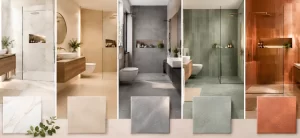
What Is the Best Bathroom Tile Colour? 15 Stylish Ideas
Read Now →
Small Living Room Ideas: How Can You Make Your Space Look Bigger?
Read Now →
Home Flooring Tiles Design: 15 Modern Ideas for Every Room
Read Now →Find the Perfect Pooja Room Tiles
Explore Spenza Ceramics' stylish tile collection and create a beautiful, peaceful mandir for your home.
Contact UsPooja Room Tiles Design FAQs
Get answers to common questions about pooja room tiles, Vastu directions, colours, wall designs and flooring to plan your perfect mandir..
15 Half Wall Tiles Design Ideas for Living Rooms in Modern Homes
A half wall tiles design for living room interiors is a practical way to add....
What Is the Best Bathroom Tile Colour? 15 Stylish Ideas
Choosing the right bathroom tile colour can make a significant difference to the appearance and....
Small Living Room Ideas: How Can You Make Your Space Look Bigger?
Small living room ideas can help you create a brighter, more open, and comfortable space....