








15
Which Floor Tiles Are Best for Every Room in Your Home?
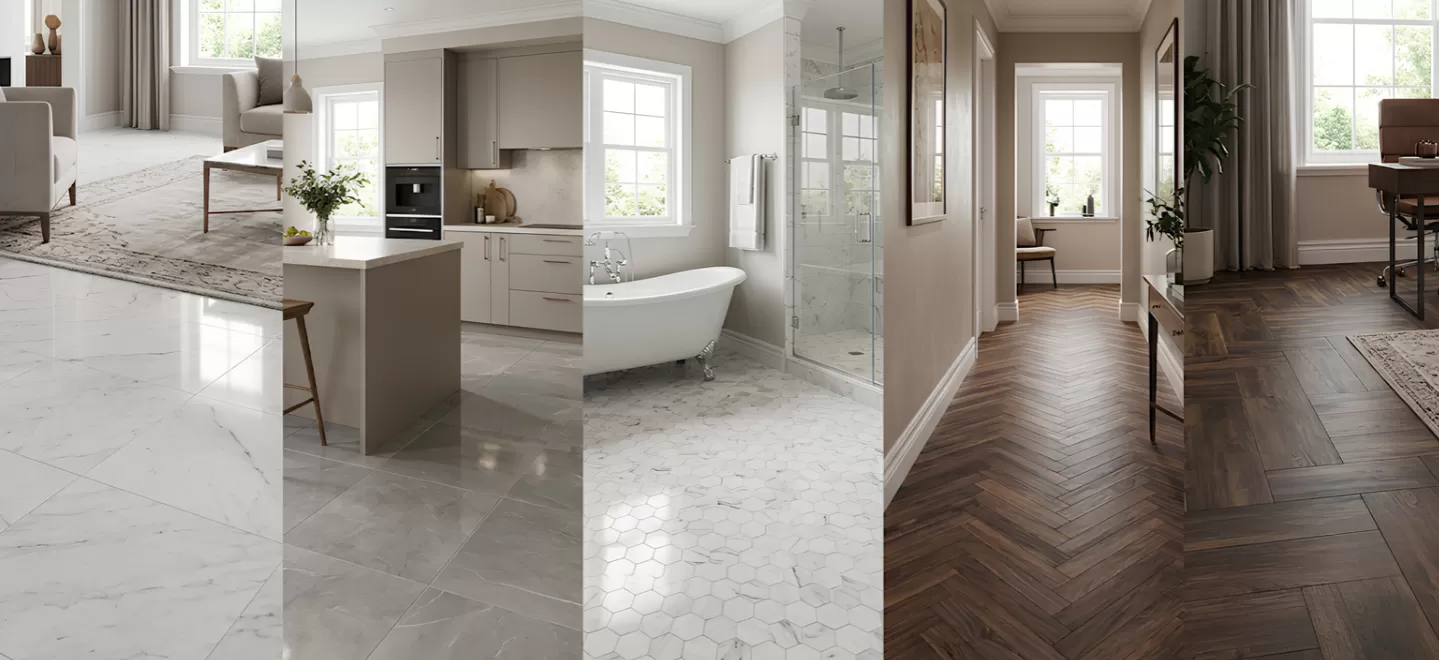
Choosing the right floor tiles for home interiors involves more than selecting a colour or design. The flooring should suit how each room is used, how much foot traffic it receives and how much maintenance it requires. Living rooms need durable and elegant surfaces, bedrooms benefit from warm finishes, kitchens require easy-to-clean flooring, and bathrooms need tiles with suitable slip resistance.
Vitrified, porcelain and ceramic tiles are popular flooring options for Indian homes. They are available in different sizes, colours, textures and finishes, making it easier to find designs that complement different interior styles.
But which floor tiles are best for each room? The ideal choice depends on the room’s functionality, moisture exposure, interior design and daily usage. In this guide, we will explore the best floor tiles for every room, popular designs, suitable colours, tile sizes and practical selection tips to help you make the right decision.
Which Floor Tiles Are Best for Every Room in Your Home?
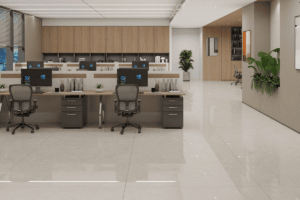
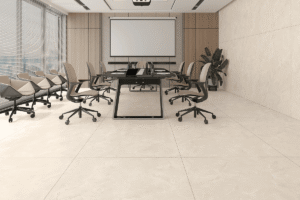
The best floor tiles for home interiors depend on the functional requirements of each space. Vitrified and porcelain tiles are popular for living rooms and bedrooms, while tiles with suitable slip resistance are preferable for wet areas.
Here is a quick comparison of recommended floor tiles for different rooms:
| Tile Colour | Best Suited For | Appearance |
|---|---|---|
| White and Ivory | Living rooms, bedrooms | Bright and spacious |
| Beige and Cream | Bedrooms, dining rooms | Warm and welcoming |
| Light Grey | Kitchens, hallways | Modern and elegant |
Understanding the requirements of each space will help you choose flooring that looks attractive while meeting everyday household needs.
1. Which Floor Tiles Are Best for the Living Room?
The living room needs flooring that can handle everyday movement while complementing the furniture, walls and overall interior design. Marble-look vitrified tiles are a popular choice because they offer an elegant stone-inspired appearance with relatively easy maintenance.
Here are some popular living room floor tile designs:
- Marble-look tiles: Suitable for elegant living rooms with contemporary furniture and neutral wall colours.
- Large-format tiles: Create a continuous flooring appearance with fewer visible grout joints.
- Glossy tiles: Reflect natural and artificial light, making darker interiors appear brighter.
- Stone-look tiles: Add subtle texture and work well with modern and minimalist interiors.
For a sophisticated appearance, consider marble-inspired designs such as Crema Nova tiles, which are available in multiple large formats.
Design tip: If your living room receives heavy foot traffic, check the tile’s wear, stain resistance and surface specifications before choosing a finish. Select a tile size that complements the room dimensions and furniture layout.
Explore different living room floor tile designs to find options that complement contemporary and traditional interiors.
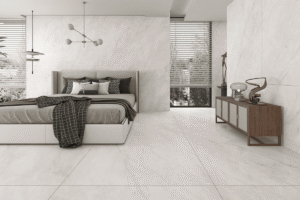
2. Which Floor Tiles Are Best for the Bedroom?
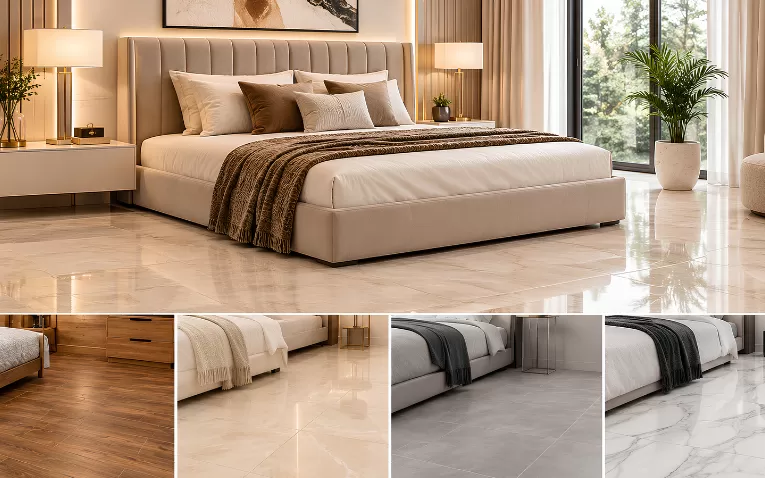
Bedroom flooring should create a calm and comfortable atmosphere. Since bedrooms generally experience less foot traffic than common areas, you can experiment with different colours, patterns and textures.
Some popular bedroom floor tile options include:
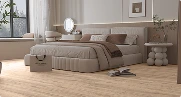
- Wooden-look tiles: Bring warmth to the room while offering the practical benefits of tile flooring.
- Beige floor tiles: Complement wooden wardrobes, neutral walls and soft furnishings.
- Matte tiles: Provide a subtle appearance without excessive reflection.
- Marble-look tiles: Create an elegant finish that works well in spacious bedrooms.
For smaller bedrooms, light shades such as cream, ivory and beige can make the space appear brighter. Warm brown and grey shades can add depth to larger rooms.
Design tip: Coordinate your floor tiles with the bed back, wardrobe and wall colours to maintain a consistent bedroom theme. Wooden-look tiles are particularly useful when you want the appearance of natural wood without choosing traditional timber flooring.
When selecting floor tiles for home bedrooms, consider the overall interior theme, furniture colour and available natural light before finalising the design.
You can explore different bedroom floor tile to compare warm, neutral and contemporary flooring styles.
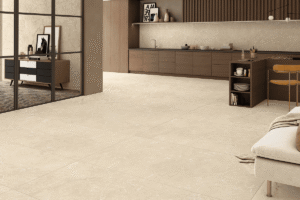
3. Which Floor Tiles Are Best for the Kitchen?
Kitchen floors are exposed to food spills, oil, water and frequent cleaning. Therefore, the best kitchen floor tiles should be durable, easy to maintain and suitable for everyday use.
Vitrified and porcelain tiles are practical options because they generally have low water absorption and are available in different finishes.
Consider these kitchen flooring designs:
- Matte tiles: Offer a subtle appearance and can be selected with suitable slip resistance.
- Stone-look tiles: Complement wooden cabinets, neutral countertops and contemporary interiors.
- Grey floor tiles: Create a modern appearance and coordinate with white, black and wooden cabinetry.
- Beige tiles: Add warmth and work well with different kitchen colour combinations.
Design tip: Select tiles that are easy to clean and check their slip-resistance specifications, especially near the sink and cooking area. Also consider stain resistance because cooking spills and food stains are common in kitchens.
For a coordinated appearance, match your kitchen flooring with the cabinet finish, countertop and backsplash. You can also experiment with contrasting wall and floor tile colours to create a balanced interior.
4. Which Floor Tiles Are Best for the Bathroom?
Bathroom flooring needs special attention because water and soap can make smooth surfaces slippery. Choose tiles with appropriate slip resistance, low water absorption and easy-to-clean surfaces.
Some suitable bathroom floor tile options include:
- Textured tiles: Provide additional surface grip and are useful in wet areas.
- Anti-slip tiles: Designed for areas where additional slip resistance is important.
- Stone-look tiles: Create a natural, spa-inspired bathroom appearance.
- Small-format tiles: Offer more grout joints, which may contribute to grip depending on the product and installation.
White, beige and light grey are popular bathroom floor tile colours because they create a clean and spacious appearance.
Design tip: Do not assume every matte tile is anti-slip. Always check the manufacturer’s slip-resistance rating and suitability for wet-floor applications. Proper floor slope and drainage are equally important to prevent water accumulation.
For bathrooms, prioritise functionality over appearance alone. The right combination of surface texture, tile size and water resistance can make everyday cleaning and maintenance easier.
Discover suitable bathroom floor tiles and designs for different bathroom interiors.
5. What Are the Best Floor Tiles for the Dining Room?
Dining room flooring should complement the living room and kitchen, particularly in open-plan homes. Since food spills and regular movement are common, choose tiles that are durable and easy to clean.
Marble-look vitrified tiles are a popular option for elegant dining spaces. Beige and cream shades work well with wooden dining tables, while grey stone-look tiles create a contemporary appearance.
Consider these options:
- Marble-look tiles: Create an elegant and sophisticated dining area.
- Beige and cream tiles: Complement wooden dining furniture and neutral interiors.
- Grey stone-look tiles: Suit modern dining spaces with minimalist furniture.
- Large-format tiles: Help create a seamless appearance, particularly in open-plan interiors.
Design tip: If your dining area connects directly to the living room, using the same flooring in both spaces can create a more spacious and coordinated look.
6. Which Floor Tiles Are Best for Hallways and Entrance Areas?
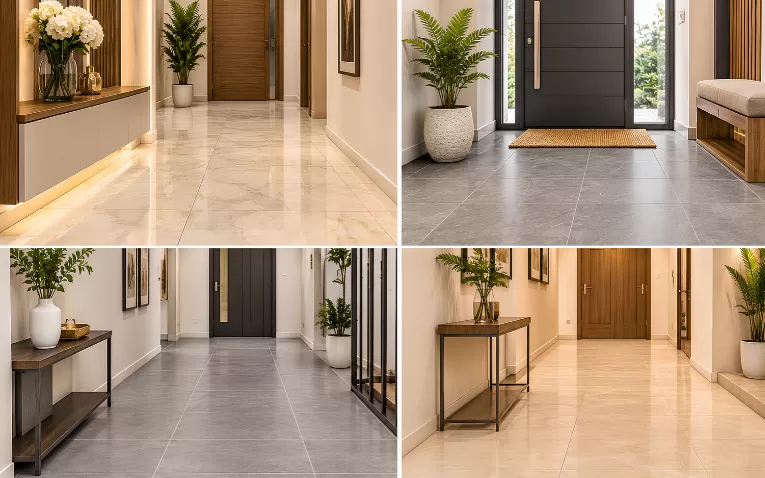
Hallways and entrances experience frequent movement, dust and outdoor footwear. Flooring in these areas should be durable, easy to clean and suitable for the expected foot traffic.
Consider these options:
- Full-body vitrified tiles: Worth considering for areas where surface wear is a concern.
- Stone-look tiles: Create a natural and understated entrance.
- Grey tiles: Offer a contemporary appearance and coordinate with different wall colours.
- Beige tiles: Make narrow hallways feel brighter and more welcoming.
Design tip: Choose a finish with appropriate slip resistance if the entrance is exposed to rainwater or outdoor moisture. Also consider darker or patterned designs if you want to make everyday dust and minor marks less noticeable.
Which Floor Tiles Colour Design Is Best for Indian Homes?
The right floor tiles colour design can influence how spacious, bright and welcoming a room appears. Light colours reflect more light, while darker shades add contrast and visual depth.
Here are some popular choices for Indian homes:
| Tile Colour | Best Suited For | Appearance |
|---|---|---|
| White and Ivory | Living rooms, bedrooms | Bright and spacious |
| Beige and Cream | Bedrooms, dining rooms | Warm and welcoming |
| Light Grey | Kitchens, hallways | Modern and balanced |
| Dark Grey | Large living spaces | Bold and contemporary |
| Brown and Wood Shades | Bedrooms, dining rooms | Natural and cosy |
| Earthy Shades | Kitchens, bathrooms | Subtle and grounded |
If your home receives limited natural light, ivory, cream and light beige flooring can help create a brighter appearance. Medium grey and brown shades are worth considering when you want more contrast.
Before choosing floor tiles for home interiors, consider how the selected colour will look with your wall paint, furniture, curtains and natural lighting.
For more inspiration, explore these popular tile colours before finalising your flooring design.
Which Types of Floor Tiles Are Best for Indian Homes?
Different tile materials offer different levels of durability, water absorption and maintenance requirements. Understanding these differences will help you choose suitable flooring for each room.
| Tile Type | Main Characteristics | Suitable Areas |
|---|---|---|
| Vitrified Tiles | Low porosity, durable and available in multiple designs | Living rooms, bedrooms and dining areas |
| Porcelain Tiles | Dense structure and low water absorption | Kitchens, bathrooms and living areas |
| Ceramic Tiles | Available in different colours, designs and finishes | Selected residential applications |
| Full-Body Vitrified Tiles | Colour and composition extend through the tile body | High-traffic and selected commercial areas |
Vitrified tiles: These tiles are popular for residential flooring because of their low porosity, durability and design variety. They are available in polished, matte and other finishes.
Porcelain tiles: Porcelain tiles are generally denser and have low water absorption. They are suitable for different indoor applications, depending on their technical specifications.
Ceramic tiles: Ceramic tiles offer a wide range of colours, patterns and finishes. Select products specifically rated for floor applications rather than assuming every ceramic tile is suitable for flooring.
Full-body vitrified tiles: These tiles have a consistent body composition throughout their thickness, making them worth considering for areas where surface wear is an important factor.
The best material depends on the room’s usage, installation requirements and product specifications. Always check the manufacturer’s technical details before purchasing.
To understand the differences between available materials and applications, read our guide to the different types of ceramic tiles.
Which Tile Size Is Best for Each Room?
Tile size can influence the overall appearance of a room, the number of grout joints and the installation process. Large-format tiles are often preferred for spacious interiors, while smaller formats can work well in compact spaces and areas with multiple corners.
| Room | Commonly Considered Tile Sizes | Design Benefit |
|---|---|---|
| Living Room | 600 × 1200 mm, 800 × 1600 mm | Creates a spacious, continuous appearance |
| Bedroom | 600 × 600 mm, 600 × 1200 mm | Complements different furniture layouts |
| Kitchen | 600 × 600 mm, 600 × 1200 mm | Offers practical flooring layouts |
| Bathroom | 300 × 300 mm, 600 × 600 mm | Provides flexibility around drainage and slopes |
| Dining Room | 600 × 1200 mm, 800 × 1600 mm | Creates an elegant flooring appearance |
| Hallway | 600 × 600 mm, 600 × 1200 mm | Works with different passage dimensions |
These are commonly available formats rather than fixed recommendations. The right size depends on the room dimensions, floor layout, drainage requirements, tile thickness and installer expertise.
Design tip: Before purchasing, calculate the required tile quantity and include additional material for cutting, breakage and wastage.
Use the tile calculator guide to estimate how many tiles you need for your flooring project.
How to Choose the Best Floor Tiles for Your Home?

Before purchasing floor tiles, consider the following factors to ensure that your selection meets the requirements of each room.
1. Consider Room Usage: Living rooms need flooring suitable for frequent movement, kitchens require easy-to-clean surfaces, and bathrooms need appropriate slip resistance.
2. Select the Right Material: Vitrified and porcelain tiles are popular for residential floors because of their durability and low porosity. Ceramic tiles can also be suitable for specific applications.
3. Choose the Appropriate Finish: Glossy finishes reflect light, while matte and textured finishes offer a more subtle appearance. For wet areas, prioritise tested slip resistance.
4. Select the Correct Tile Size: Large-format tiles can create a continuous appearance in spacious rooms. Medium-sized tiles may be easier to accommodate in smaller rooms and areas with multiple corners.
5. Match Tiles with Your Interiors: Consider wall paint, furniture, cabinets and natural lighting. Take tile samples home to understand how the colours look in your actual space.
6. Check Maintenance Requirements: Consider cleaning frequency, stain resistance and the type of household activity. Select flooring that is practical for your daily routine.
7. Plan Your Flooring Budget: Include tile prices, adhesive, grout, labour, cutting and wastage when calculating the total installation cost.
For a better understanding of material and installation expenses, read our guide on the cost of tiling per square foot in India.
Conclusion
Choosing the best floor tiles for home interiors requires balancing durability, appearance, maintenance and the functional needs of every room. Marble-look vitrified tiles can create elegant living spaces, wooden-look flooring adds warmth to bedrooms, easy-to-clean surfaces work well in kitchens, and tiles with tested slip resistance are important for bathrooms.
At Spenza Ceramics, a leading tiles brand in India, you can explore 7,000+ designs in different colours, sizes, finishes and patterns for residential and commercial interiors. Whether you are renovating your home or planning a new space, discover floor tiles that complement your interiors and everyday requirements.
Related Blogs
Which Bed Back Design Is Best for Indian Homes? 15 Stylish Ideas
Read Now →
15 Half Wall Tiles Design Ideas for Living Rooms in Modern Homes
Read Now →
Which Pooja Room Tiles Design Is Best? 10 Beautiful Ideas with Vastu Tips
Read Now →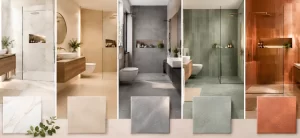
What Is the Best Bathroom Tile Colour? 15 Stylish Ideas
Read Now →Find the Perfect Floor Tiles for Every Room
Explore stylish floor tiles in modern colours, elegant patterns and premium finishes for every room in your home.
Contact UsFrequently Asked Questions About Floor Tiles
Find answers to common questions about choosing the best floor tiles for every room, including designs, colours, sizes and materials for Indian homes..
Which Bed Back Design Is Best for Indian Homes? 15 Stylish Ideas
The best bed back design for Indian homes combines style, comfort and functionality while complementing....
15 Half Wall Tiles Design Ideas for Living Rooms in Modern Homes
A half wall tiles design for living room interiors is a practical way to add....
Which Pooja Room Tiles Design Is Best? 10 Beautiful Ideas with Vastu Tips
White marble-look, ceramic and porcelain tiles are popular choices for a pooja room because they....