








14
Home Flooring Tiles Design: 15 Modern Ideas for Every Room
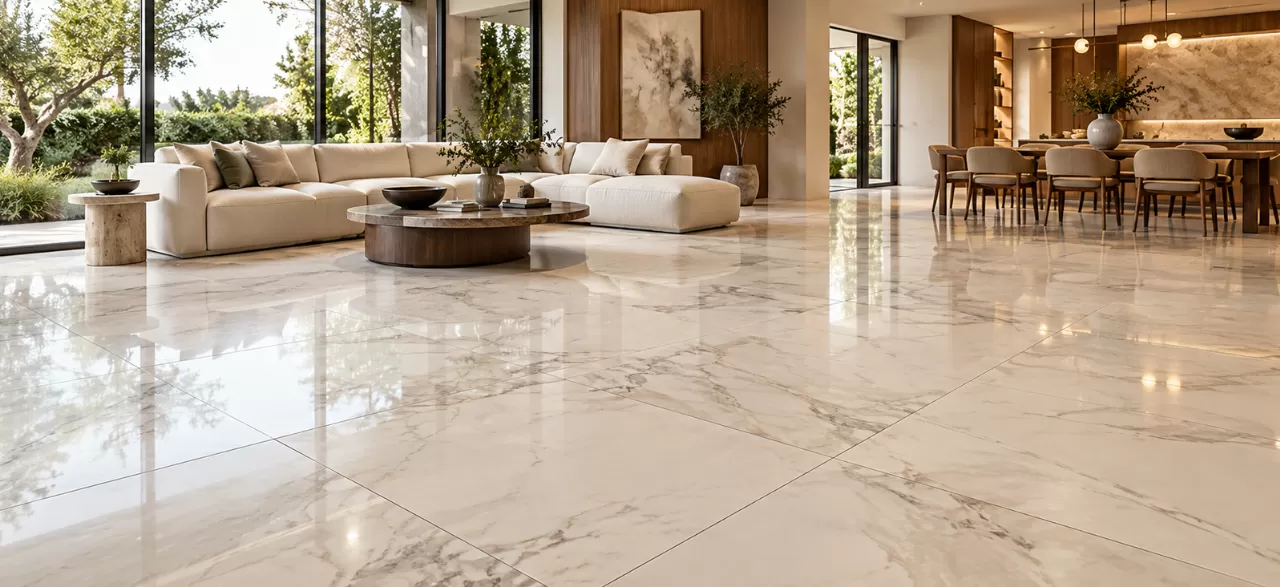
The best home flooring tiles design combines visual appeal, durability, easy maintenance and suitability for each room. Popular options include large-format vitrified tiles for a seamless look, marble-look tiles for elegant interiors, wood-effect tiles for warmth and textured tiles for areas that require better traction. The right choice depends on room size, lighting, foot traffic, moisture exposure and your preferred interior style.
Whether you are designing a new home or renovating an existing space, understanding tile types, colours, finishes and patterns can help you choose flooring that looks attractive and performs well over time. This guide covers 15 modern flooring ideas, compares suitable tiles for different rooms and explains how to select the right option for your home.
Floor Tiles for Home: Types, Finishes and Uses
Floor tiles are available in different materials, sizes, colours and finishes to suit residential interiors. Ceramic, porcelain and vitrified tiles are common options, while marble-look, wood-effect and stone-look describe visual styles rather than separate material categories.
Before choosing a design, compare the tile’s intended application, maintenance requirements, surface finish and technical specifications.
| Tile type or style | Main benefit | Suitable applications |
|---|---|---|
| Ceramic tiles | Wide choice of colours and designs | Suitable indoor residential areas, depending on specifications |
| Porcelain tiles | Dense construction and practical maintenance | Living rooms, kitchens and other suitable indoor areas |
| Vitrified tiles | Popular for contemporary residential flooring | Living rooms, bedrooms, dining areas and hallways |
| Marble-look tiles | Elegant stone-inspired appearance | Living rooms, bedrooms and formal spaces |
| Wood-effect tiles | Warm timber-inspired appearance | Bedrooms, living rooms and dining areas |
| Stone-look tiles | Natural-looking texture and patterns | Living rooms, hallways and suitable outdoor areas |
| Textured tiles | Surface texture can support traction when appropriately specified | Bathrooms, balconies and other suitable areas |
Important: Material, appearance and finish are different selection factors. A marble-look tile, for example, may be porcelain or another tile type. Always check the manufacturer’s specifications for durability, water exposure, slip resistance and intended use.
15 Best Home Flooring Tiles Design Ideas for Modern Homes
Modern flooring designs range from understated neutral surfaces to decorative patterns and natural-material-inspired finishes. The following ideas explain where each style works best, what it offers and what to consider before choosing it.
1. Large-Format Tiles for a Spacious Look
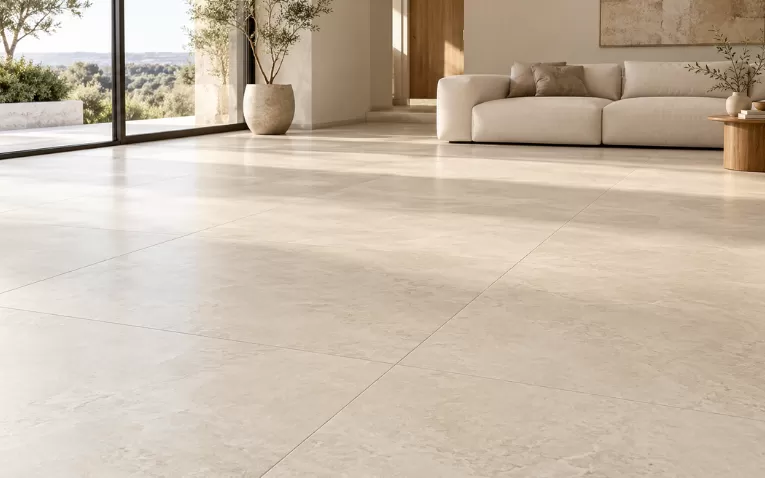
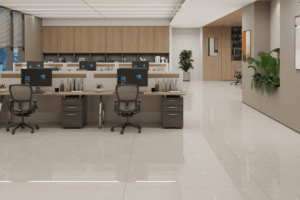
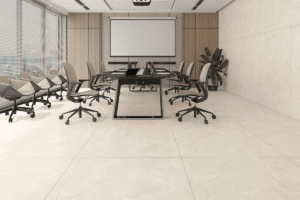
Large-format tiles create a clean, continuous appearance by reducing the number of grout lines across a floor. Light shades such as ivory, cream, beige and soft grey can complement contemporary interiors.
If you are planning flooring for your main living area, explore these modern living room tiles design ideas to compare contemporary styles, tile sizes, colours and finishes. The right living room flooring can create a spacious appearance while complementing your furniture, lighting and overall interior design.
Best for: Living rooms, dining areas, large bedrooms and open-plan spaces.
2. Marble-Look Tiles for an Elegant Interior
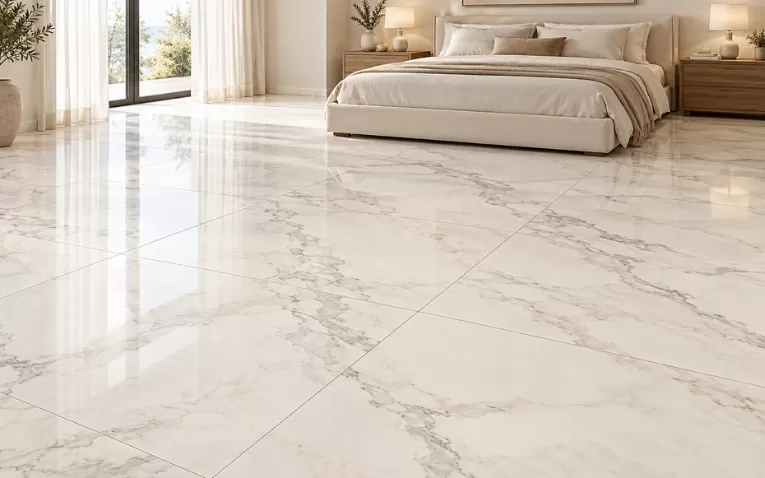
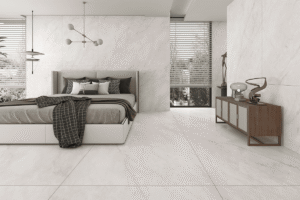
Marble-look tiles reproduce the veining and colour variations associated with natural marble. White, beige and grey designs can create an elegant foundation for contemporary furniture and understated décor.
Best for: Living rooms, bedrooms, dining areas and formal indoor spaces.
3. Wood-Effect Tiles for Warmth and Character
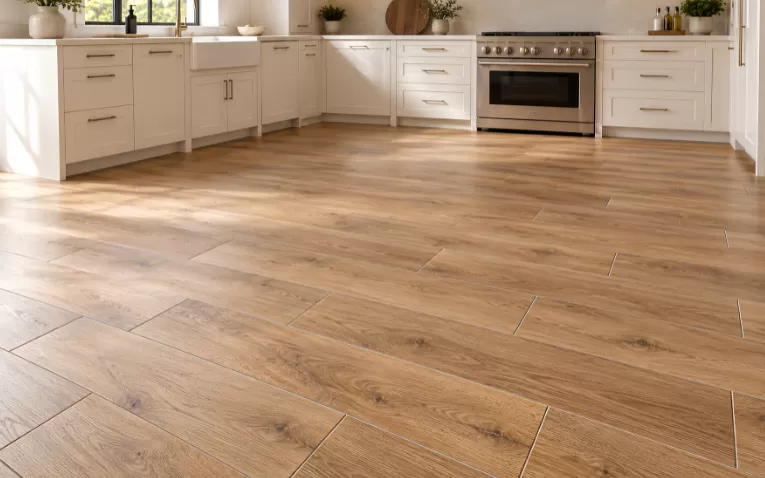
Wood-effect tiles combine timber-inspired grain patterns with the characteristics of a tiled surface. Oak, honey, walnut and other wood-inspired shades can introduce warmth without using natural wooden flooring.
Best for: Bedrooms, living rooms, dining spaces and suitable kitchens.
4. Natural Stone-Look Tiles for Timeless Appeal
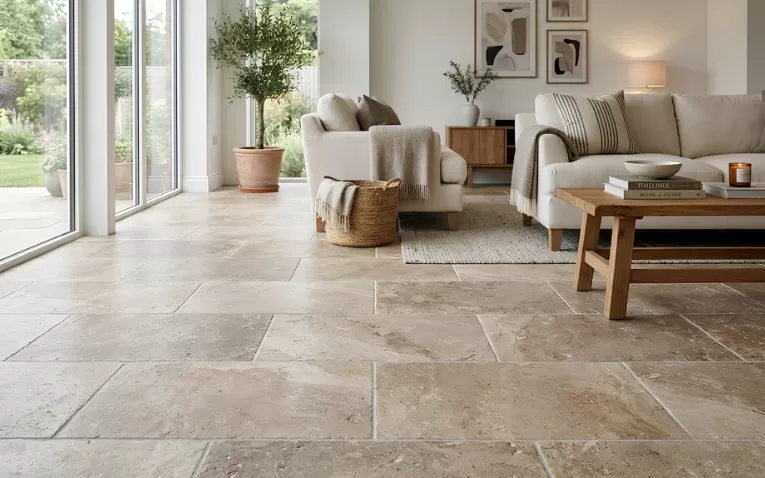
Stone-look tiles recreate the appearance of materials such as limestone, slate and travertine. Their earthy colours and varied patterns can complement both contemporary and traditional interiors.
Best for: Living rooms, hallways and outdoor spaces when the selected tile is rated for the application.
5. Geometric Tiles for a Creative Floor
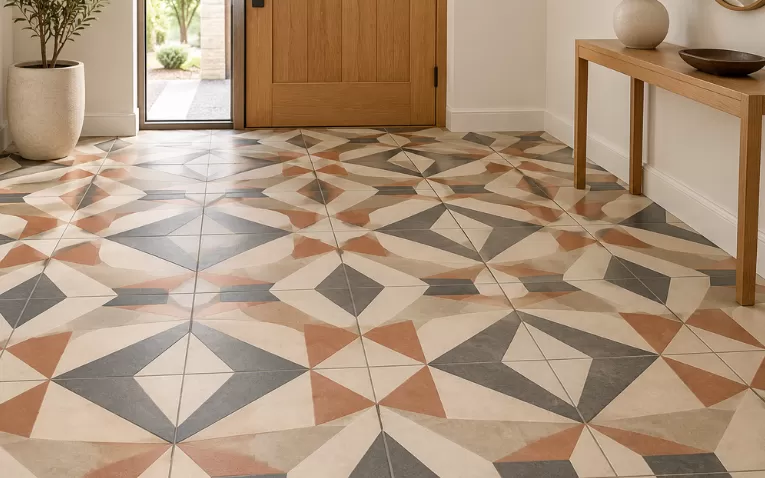
Geometric tiles use shapes such as hexagons, diamonds and repeating angular patterns to create a distinctive floor. They can introduce character without requiring elaborate furniture or wall décor.
Best for: Entrance areas, selected kitchens, bathrooms and feature spaces.
6. Herringbone and Chevron Layouts
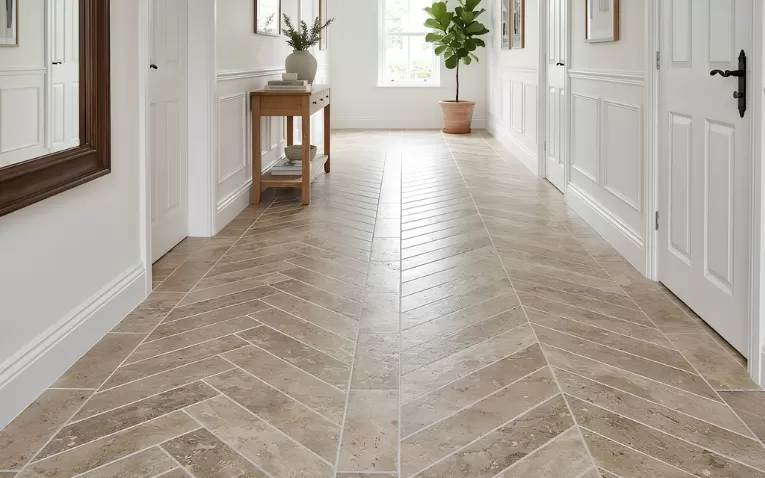
Herringbone and chevron layouts add movement to a floor through angled arrangements of rectangular tiles. Herringbone uses alternating right-angle placements, while chevron creates continuous V-shaped lines.
Best for: Hallways, bedrooms, living rooms and selected feature areas.
7. Warm Beige and Earthy-Tone Tiles
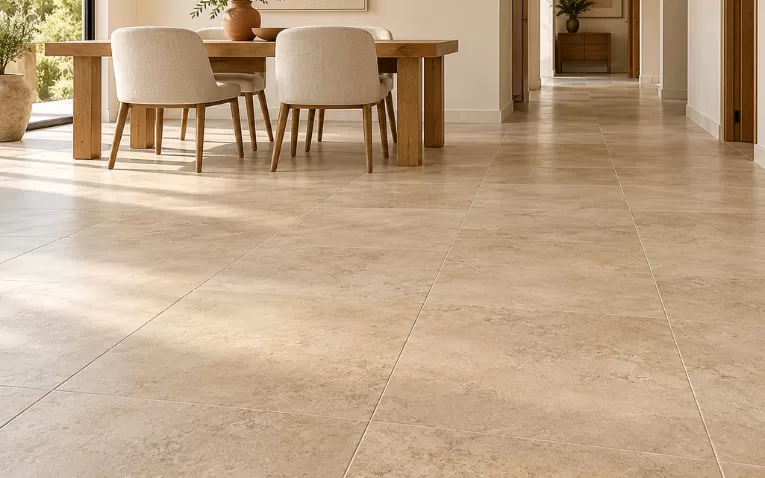
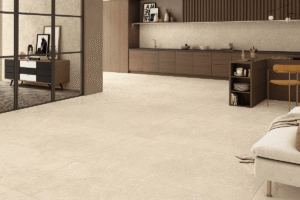
Beige, cream, taupe, sand and light-brown tiles create a warm, versatile foundation for home interiors. These shades work well with wooden furniture, white walls and natural fabrics.
Best for: Living rooms, bedrooms, dining areas and hallways.
8. Concrete-Look Tiles for Modern Minimalism
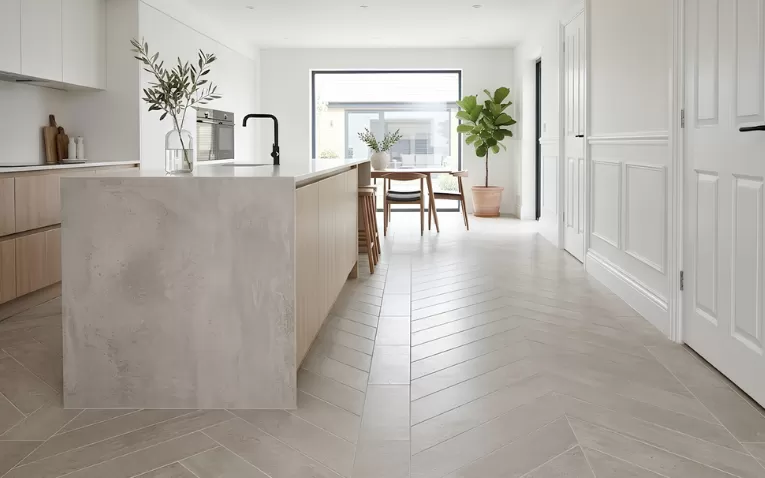
Concrete-look tiles offer a restrained appearance inspired by contemporary and industrial interiors. Soft grey, charcoal and warm cement shades can work with metal accents, natural wood and minimalist furniture.
Best for: Living rooms, kitchens, corridors and home offices.
9. Matte-Finish Tiles for Understated Style
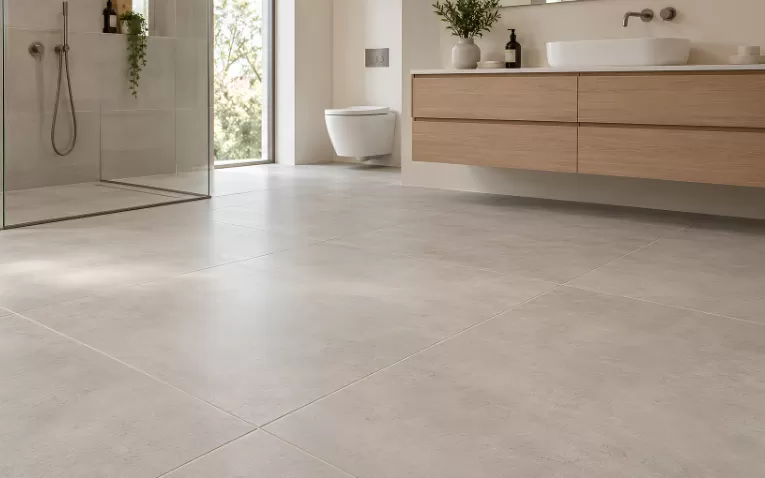
Matte tiles have a low-reflective surface that creates a subtle, contemporary appearance. They are available in plain colours and stone-look, marble-look and concrete-inspired designs.
Best for: Bedrooms, living rooms, kitchens and suitable wet areas.
10. Glossy Tiles for Brighter Interiors
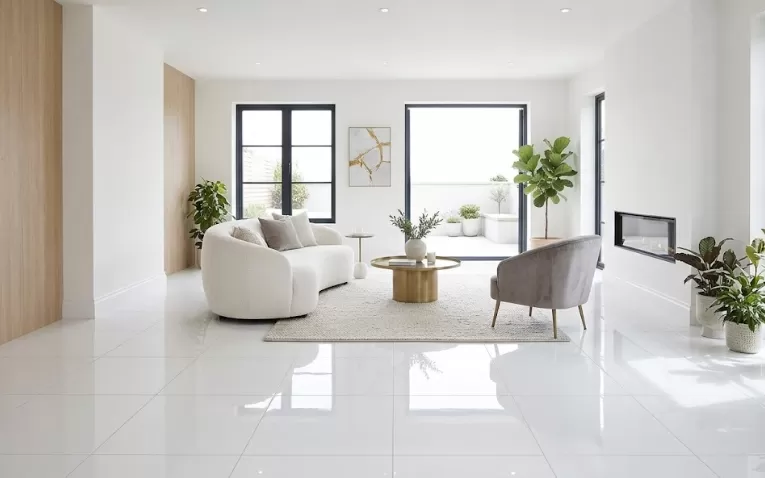
Glossy tiles reflect more light and create a polished appearance. Light-coloured surfaces can help an interior feel brighter, depending on its natural lighting and surrounding décor.
Best for: Dry indoor living spaces, dining rooms and selected bedrooms.
11. Grey Floor Tiles for Contemporary Homes
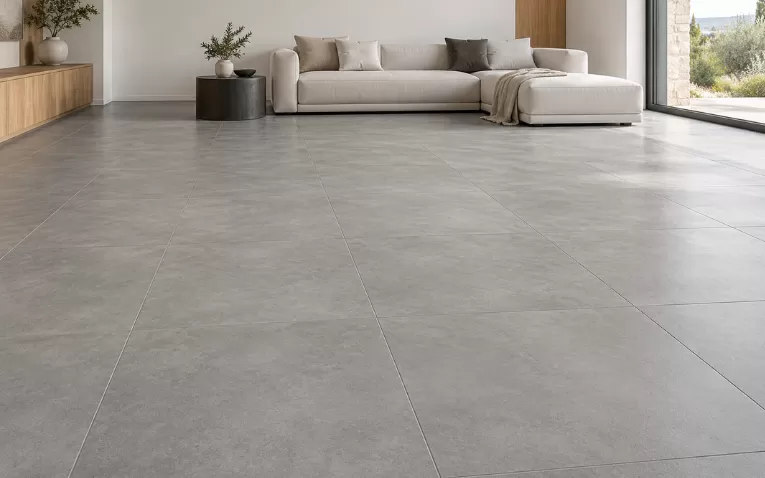
Grey floor tiles offer a neutral base that works with many furniture and wall colours. Light grey creates a subtle appearance, while charcoal can provide contrast against pale walls and furnishings.
Best for: Living rooms, kitchens, hallways and home offices.
12. White and Ivory Tiles for a Clean Look
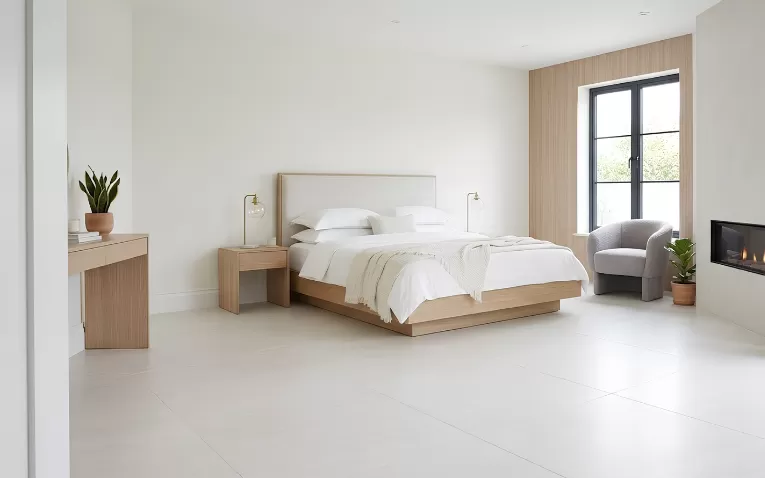
White and ivory tiles create a bright, open appearance and work well with minimalist furniture, natural wood and contrasting accents. Marble-look designs add pattern, while plain finishes offer a simpler foundation.
Best for: Living rooms, bedrooms and well-lit indoor areas.
13. Patterned Tiles for a Statement Floor
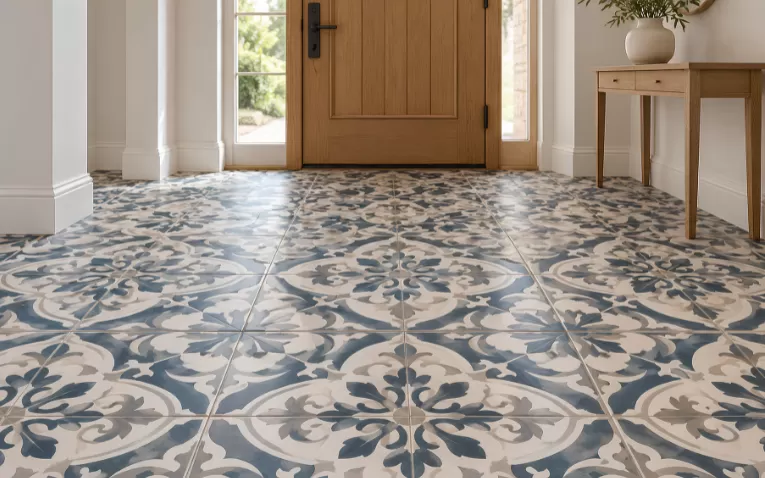
Patterned tiles feature decorative motifs, contrasting colours or repeating designs. They can turn an entrance or selected interior area into a focal point.
Best for: Entrance spaces, selected dining areas, kitchens and decorative zones.
14. Terrazzo-Look Tiles for Visual Texture
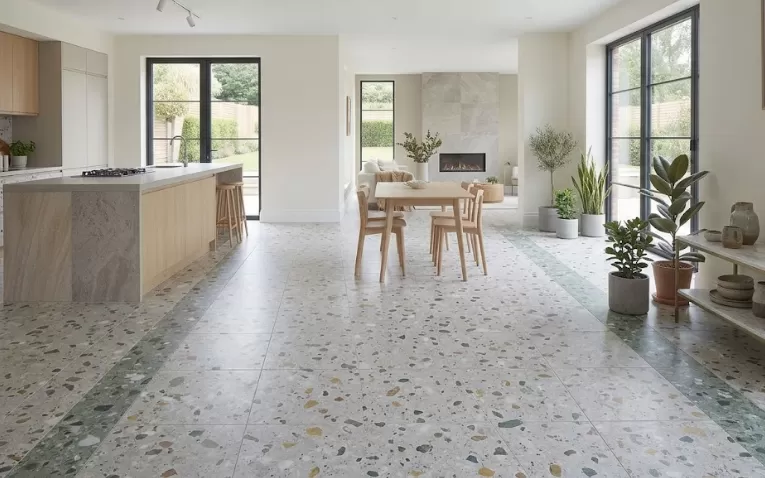
Terrazzo-look tiles feature speckled patterns inspired by traditional terrazzo surfaces. Depending on the colour and pattern, they can create a contemporary, playful or retro-inspired interior.
Best for: Living rooms, dining areas, kitchens and hallways.
15. Coordinated Tiles for a Seamless Home
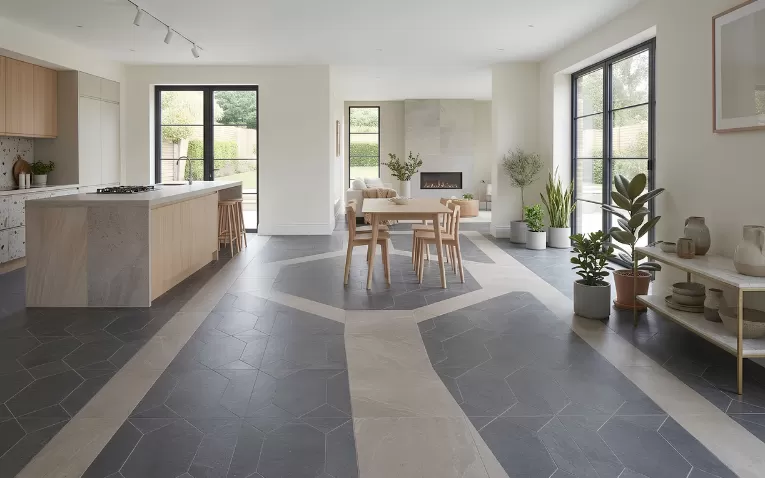
Coordinated flooring uses related colours, patterns or finishes to create a consistent look across connected rooms. This approach can help open-plan living and dining areas feel more cohesive.
Best for: Open-plan homes, connected hallways and coordinated interiors.
Which Floor Tiles Are Best for Each Room
The most suitable floor tiles depend on how each room is used. Living rooms often prioritise appearance and durability, kitchens need practical surfaces for spills and cleaning, and bathrooms require careful attention to wet-floor safety.
| Room | Recommended tile options | Main selection priority |
|---|---|---|
| Living room | Large-format, marble-look, stone-look | Appearance, durability and maintenance |
| Kitchen | Porcelain, stone-look, suitable matte finishes | Cleaning, spills and traction |
| Bedroom | Wood-effect, beige, matte tiles | Visual warmth and comfort |
| Bathroom | Suitable textured or slip-resistant tiles | Wet-floor safety and drainage |
| Hallway | Durable large-format or patterned tiles | Frequent foot traffic |
| Dining area | Stone-look, marble-look, wood-effect | Spill management and cleaning |
| Balcony | Outdoor-rated textured tiles | Weather exposure and slip resistance |
| Entrance | Suitable durable tiles with practical finishes | Dirt, abrasion and maintenance |
These are general recommendations rather than universal rules. Check the tile’s intended application and manufacturer specifications before purchasing.
How to Choose the Best Floor Tiles for Your Home
Choose the best floor tiles for your home by considering each room’s purpose, available space, lighting, budget and maintenance needs. Compare tile materials, sizes, colours and finishes to find a balance between appearance, durability and everyday practicality. Check the cost of tiling per sq ft in India to plan your flooring budget effectively. Ensure the tiles meet the safety and performance requirements of the intended area before making your final decision.
1. Consider the Room Size
Tile dimensions and layout influence the visual proportions of a room. Larger tiles can reduce grout lines, while smaller formats and patterns can add detail. Measure the area and discuss cutting requirements with your installer before selecting a size.
2. Choose the Right Tile Material
Ceramic, porcelain and vitrified tiles have different product characteristics. Compare the specifications, intended applications, maintenance requirements and durability of the actual products instead of relying on material names alone.
3. Match the Finish to the Room
Glossy surfaces reflect more light, while matte finishes offer a more subdued appearance. For wet areas, check the tile’s slip-resistance characteristics and suitability for the intended conditions.
4. Select a Practical Colour
Neutral colours are versatile, making them some of the best colours for floor tiles in modern homes. Dirt visibility depends on the shade, surface texture and lighting. Compare tile samples against your walls, furniture and natural light before finalising your choice.
5. Plan the Grout and Installation Layout
Grout colour influences the finished appearance. Matching grout can make a floor look more continuous, while contrasting grout highlights the tile pattern. Proper substrate preparation, levelling and joint planning are also essential for a good installation.
6. Consider Maintenance and Long-Term Use
Think about daily foot traffic, spills, cleaning routines and the product’s care instructions. Select tiles that suit your household’s needs rather than choosing solely on appearance.
7. Calculate the Required Quantity
Measure the floor’s length and width to calculate its area.
For example, a room measuring 12 feet by 10 feet has an area of 120 square feet. Add an appropriate allowance for cutting, breakage and the selected layout. The final quantity will depend on the tile dimensions and room shape.
Use a tile calculator to estimate the requirement before confirming the order with your installer.
Common Mistakes to Avoid When Choosing Floor Tiles
- Choosing only by appearance: Check whether the tile suits the room’s moisture, traffic and maintenance requirements.
- Ignoring wet-floor safety: Confirm slip-resistance suitability for bathrooms, balconies and other areas exposed to water.
- Overlooking lighting: Compare samples under daylight and artificial lighting.
- Choosing an unsuitable tile size: Consider room dimensions, cutting waste and installation requirements.
- Forgetting grout and installation: The final result depends on workmanship as well as tile quality.
- Ordering without measuring: Calculate each room’s area and allow for cutting waste.
- Following every trend: Choose a design that suits your home, lifestyle and long-term preferences.
Conclusion
The best home flooring tiles design balances style, durability, easy maintenance and the practical needs of each room. From elegant marble-look tiles to warm wood-effect finishes and modern large-format designs, choose flooring that complements your interiors and suits your everyday lifestyle.
Spenza Ceramics, a leading choice for homeowners exploring stylish tile solutions, offers a range of designs to help you create beautiful and functional spaces. Discover collections from the best tiles company in India and find the right home flooring tiles design to transform your home with lasting style.
Related Blogs
Marble and Granite Difference: Find the Best for Your Home
Read Now →
Vastu for Home: 15 Simple Tips for a Positive Space
Read Now →
Normal Village House Design: 15 Simple Ideas
Read Now →
What Are the Best Interior Tile Colours for Modern Homes in 2026?
Read Now →Transform Your Home with the Perfect Floor Tiles
Discover stylish home flooring tiles design ideas from Spenza Ceramics and find the perfect tiles to elevate every room with lasting style.
Contact UsFAQs for Home Flooring Tiles Design
Find answers to common questions about home flooring tiles design, including the best tile types, colours, finishes and flooring options for every room..
Marble and Granite Difference: Find the Best for Your Home
The main marble and granite difference lies in their formation, hardness, appearance and maintenance requirements.....
Vastu for Home: 15 Simple Tips for a Positive Space
Vastu for home is a traditional Indian approach to planning a house according to directions,....
Normal Village House Design: 15 Simple Ideas
A normal village house design focuses on comfortable living, practical space planning, natural light, proper....