















1
Difference Between Ceramic and Porcelain Tiles: Which Is Best for Kitchen Floors?
Porcelain tiles are generally better for kitchen flooring because they are more durable, water-resistant, and suitable for high-traffic areas. However, ceramic tiles are a more affordable option and work well in kitchens with moderate use.
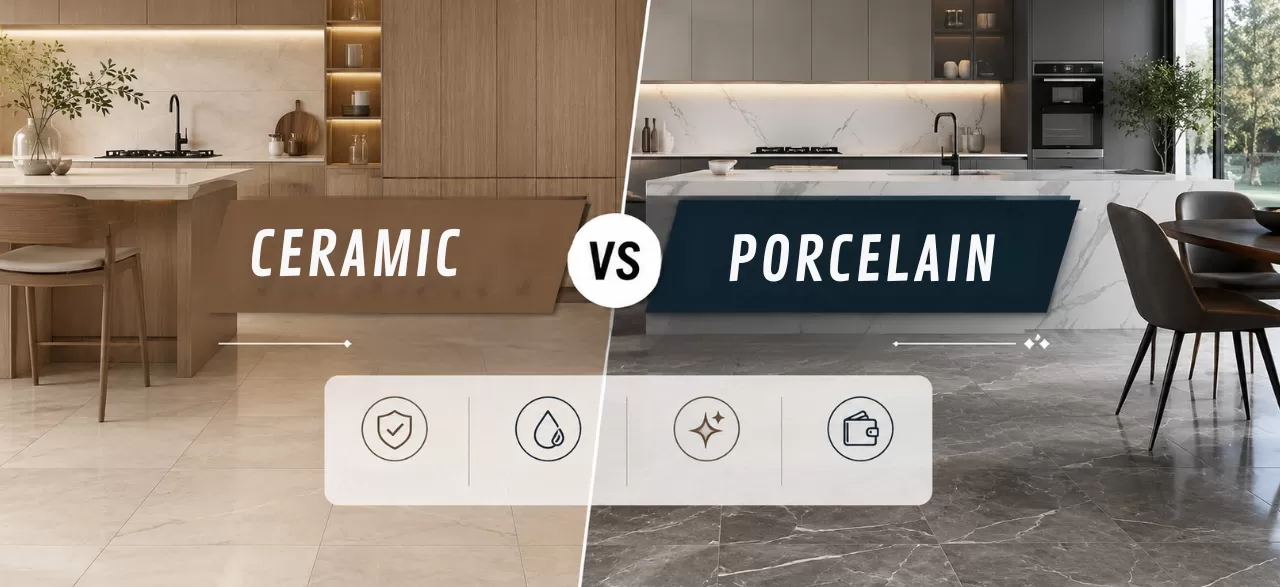
When comparing ceramic vs porcelain tiles for kitchen flooring, the key differences come down to strength, moisture resistance, maintenance, and long-term performance. While both options offer a wide range of designs and finishes, their durability can vary significantly in a busy kitchen environment.
Since kitchens are exposed to spills, stains, and constant foot traffic, choosing the right tile is essential for long-term value and easy maintenance.
In this guide, you’ll learn the difference between ceramic and porcelain tiles, their pros and cons, and which option is best for your kitchen based on your needs and budget.
What is a Ceramic Tile?
Ceramic tiles are made from natural clay that is shaped and fired at high temperatures, making them hard and durable. Most come with a glazed surface, which adds color, design, and a smooth finish.
They are popular because they are affordable, easy to maintain, and available in many styles, making them a great fit for different kitchen designs.
However, ceramic tiles are less dense and slightly more absorbent than porcelain, so they are better suited for moderate-use areas rather than very busy kitchens.
Ceramic tiles are primarily used for the following:
- Kitchen floors
- Bathroom walls and floors
- Backsplashes
- Living areas with moderate foot traffic
What is a Porcelain Tile?
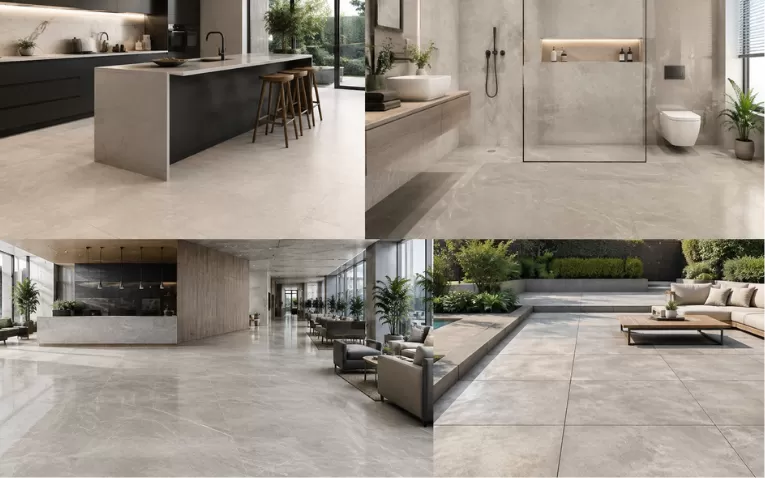
Porcelain tile is technically a type of ceramic tile, but it is made using refined clay and later fired at higher temperatures. This manufacturing process helps create a denser and much harder tile structure.
Due to its low porosity, porcelain absorbs less water compared to standard ceramic tiles. This makes it highly suitable for areas that are often exposed to moisture, heavy usage, and frequent cleaning.
Porcelain tiles are primarily used for the following:
- Kitchen floors
- Bathroom floors
- Commercial spaces
- Outdoor areas
- High-traffic zones
Modern porcelain tiles are a popular choice since they can easily replicate premium materials like marble, wood, and natural stone while also providing better durability.
| Feature | Ceramic Tile | Porcelain Tile |
|---|---|---|
| Material | Made from natural clay | Made from refined clay and minerals |
| Manufacturing process | Fired at lower temperatures | Fired at higher temperatures |
| Density | Less dense | More dense and compact |
| Water absorption | Higher absorption | Very low absorption |
| Durability | Suitable for moderate use | Suitable for heavy use |
| Scratch resistance | Good | Higher resistance |
| Installation | Easier to cut and install | Requires specialised tools |
| Cost | More affordable | Usually more expensive |
| Maintenance | Easy to clean | Easy to clean with better stain resistance |
Porcelain Tile vs. Ceramic Tile: Which Is Better for Kitchen Floors?
When comparing porcelain tile vs ceramic tile for kitchens, especially for kitchen floor tiles, there is no single defined answer for every home. The right choice will always depend on your budget, lifestyle, and expected usage.
But porcelain tiles are often preferred for kitchen floors, as kitchens often experience frequent exposure to the following:
- Water
- Food spills
- Oil stains
- Heavy movement
- Cleaning products
Let’s try to understand why porcelain has an advantage over ceramic tiles.
Porcelain Offers Better Water Resistance
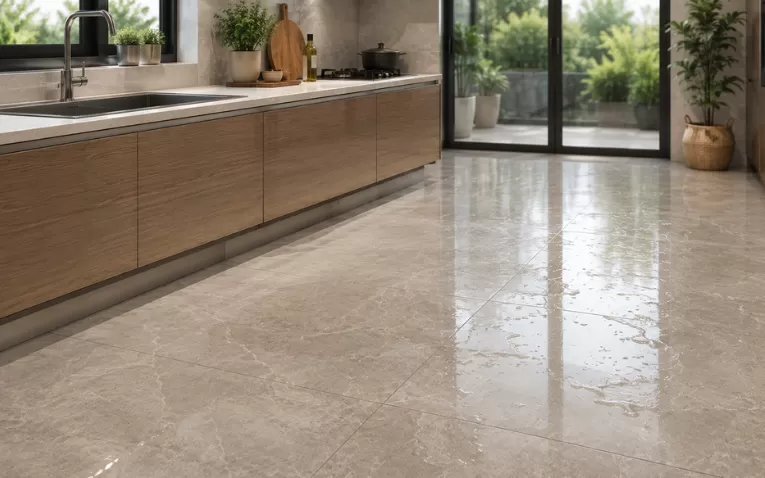
Kitchen floors are regularly exposed to moisture, especially around sinks and cooking areas.
In fact, porcelain tiles have lower water absorption capabilities due to their dense structure. As per industry standards, porcelain tiles generally absorb 0.5% or less water, which makes them highly resistant to moisture.
Moreover, this also makes porcelain tiles a practical option for kitchens where spills and cleaning are a part of everyday life.
Ceramic tiles can also work well in kitchens, especially when they are properly glazed and installed. But porcelain offers an additional layer of protection.
Porcelain Can Handle Heavy Usage Better
A kitchen floor should be able to withstand years of movement, furniture placement and daily activities.
Porcelain’s dense structure makes it more resistant to the following:
- Scratches
- Cracks
- Wear
- Impact damage
For families with extensive kitchen usage, pets, or children, porcelain can offer better long-term performance.
Ceramic tiles, on the other hand, are still durable for residential kitchens, but they might not be able to perform well in extremely high-traffic areas.
Both Tiles Provide Excellent Design Options
A common misconception is that stronger tiles have fewer design options.
But modern manufacturing has completely changed this mindset. Both ceramic and porcelain tiles are available in a wide range of styles, making them suitable for the best kitchen tile designs in modern homes. Porcelain tiles, in particular, are well-known for creating a premium look since they can easily replicate natural materials like marble, wood, and stone.
Popular porcelain finishes include the following:
FinishAppearance
Marble effectLuxury and elegant interiorsWood effectWarm and natural lookStone effectContemporary kitchen designConcrete effectModern industrial styleMatte finishMinimal and sophisticated appearance
Ceramic tiles also provide attractive designs and remain a good option for homeowners who are looking for affordable style upgrades.
Factors to Consider Before Selecting Kitchen Floor Tiles
Finding the best tile for the kitchen floor requires users to look beyond appearance. Some of the vital factors that you need to consider are:
| Factor | Why It Matters |
|---|---|
| Daily usage | Busy kitchens need stronger flooring. |
| Water exposure | Moisture resistance helps prevent damage. |
| Budget | Ceramic offers a more affordable option. |
| Maintenance | Both tiles require regular cleaning. |
| Surface texture | Anti-slip finishes improve safety. |
| Installation | Porcelain may require professional installation. |
| Design preference | Both options offer multiple styles. |
Is Porcelain Always the Best Choice for Kitchen Floors?
Porcelain is often recommended as the best tile for kitchen floors due to its strength, moisture resistance, and durability.
But ceramic tiles should not be ignored.
You can consider ceramic tiles as a good option if:
- The kitchen has moderate usage.
- You have a limited budget.
- The homeowner is looking for an easy installation process.
- The chosen tiles have suitable floor-grade strength.
The right decision will depend on your specific needs rather than opting for one material universally.
Maintenance Tips for Ceramic and Porcelain Tiles
Both types of tiles are relatively easy to maintain when they are cared for properly.
Follow these simple maintenance tips:
- Immediately Clean the Spills: You should wipe away liquids, food, and other spills as soon as possible to reduce the risk of staining, especially around the grout lines.
- Regularly Sweep or Vacuum: You should remove dust, crumbs, and loose debris before they build up or create scratches on the tile surface.
- Avoid Harsh Chemicals: Strong acids, bleach-based cleaners, and abrasive products can damage the finish, affect the colour, or weaken the grout line.
- Use Mild Cleaning Agents: You should clean the floor with warm water and a gentle, tile-safe solution that will be well-suited for specific materials and finishes.
- Keep the Grout Lines Clean: Grout can easily collect dirt and moisture over time, so make sure to clean it periodically with the help of a soft brush and a suitable grout cleaner.
- Avoid Abrasive Tools: Steel wool, rough scrubbers, and hard brushes may scratch polished or delicate tile finishes.
Wrapping Up
The difference between ceramic and porcelain tile mainly comes down to density, durability, water resistance, and overall usage. Ceramic tiles are affordable, versatile, and available in a wide range of designs, making them a practical choice for many residential kitchens. Porcelain tiles, on the other hand, offer higher strength, lower water absorption, and superior durability making them ideal for high-traffic and moisture-prone kitchen floors.
Related Blogs

Vastu for Home: 15 Simple Tips for a Positive Space
Read Now →
Normal Village House Design: 15 Simple Ideas
Read Now →
What Are the Best Interior Tile Colours for Modern Homes in 2026?
Read Now →
What Are the Best Ground Floor House Design Ideas for Indian Homes?
Read Now →Upgrade Your Kitchen with Premium Tiles
Explore durable and stylish kitchen floor tiles from Spenza Ceramics—designed for long-lasting performance and modern living.
Contact UsFrequently Asked Questions About Kitchen Floor Tiles
Find answers to the most frequently asked questions about ceramic vs porcelain tiles for kitchen floors. Learn about durability, water resistance, cost, maintenance, and which option is best for your kitchen based on your needs and budget..
Vastu for Home: 15 Simple Tips for a Positive Space
Vastu for home is a traditional Indian approach to planning a house according to directions,....
Normal Village House Design: 15 Simple Ideas
A normal village house design focuses on comfortable living, practical space planning, natural light, proper....
What Are the Best Interior Tile Colours for Modern Homes in 2026?
Choosing the right interior tile colours can completely change how a modern home looks and....