









28
What Is the Difference Between Ceramic vs. Porcelain Tile? A Complete Guide
Choosing the right tile for your home can be challenging, especially when comparing ceramic tile vs porcelain tile. Both options are popular for flooring and walls because they offer durability, attractive designs, and easy maintenance. However, their composition, strength, water resistance, and ideal applications make them different from each other.
The main difference between ceramic and porcelain tiles lies in their density and manufacturing process. Porcelain tiles are denser, less porous, and more durable, while ceramic tiles are more affordable and offer a wide range of design options.
Understanding the difference between ceramic and porcelain tiles will help you select the right option for your kitchen, bathroom, living room, or outdoor spaces.
Ceramic Tile vs Porcelain Tile: Quick Comparison
| Feature | Spenza Ceramic Tiles | Spenza Porcelain Tiles |
|---|---|---|
| Material | Made from natural clay, minerals, and water with stylish glazed finishes | Made from refined clay and premium materials for higher strength and durability |
| Density | Less dense and suitable for residential applications | Highly dense with a stronger and more compact structure |
| Water Absorption | Higher water absorption, ideal for dry and low-moisture areas | Very low water absorption, perfect for moisture-prone spaces |
| Durability | Suitable for moderate foot traffic areas | Designed for heavy foot traffic and long-lasting performance |
| Maintenance | Easy to clean and maintain | Requires minimal upkeep due to stain-resistant surface |
| Design Options | Available in a wide range of colours, patterns, and textures | Premium finishes inspired by marble, stone, and wood designs |
| Best For | Walls, bedrooms, decorative areas, and low-traffic spaces | Floors, kitchens, bathrooms, outdoor areas, and commercial spaces |
Composition and Manufacturing Process
Ceramic Tiles
Ceramic tiles are manufactured using a mixture of natural clay, minerals, and water. This mixture is shaped into tiles and fired in a kiln at high temperatures. After firing, a protective glaze is often applied to improve appearance and protect the surface from stains.
Because ceramic tiles are easier to manufacture, they are available in various colours, patterns, textures, and finishes, making them a popular choice for residential spaces.
Porcelain Tiles
Porcelain tiles are made using refined clay and other natural materials that are fired at extremely high temperatures. This process creates a denser and stronger tile with lower water absorption.
Many porcelain tiles are rectified, meaning their edges are precisely cut to achieve uniform size and allow minimal grout lines during installation.
Difference Between Ceramic and Porcelain Tiles
1. Durability and Strength
Ceramic Tiles
Ceramic tiles are durable and work well for areas with normal foot traffic. However, compared to porcelain tiles, they are softer and less dense. Heavy impact or excessive pressure may cause cracks or chips over time.
They are commonly used for:
- Bedroom floors
- Living room walls
- Kitchen backsplashes
- Decorative areas
Porcelain Tiles
Porcelain tiles are known for their exceptional strength and durability. Their dense structure makes them resistant to scratches, cracks, and heavy wear.
They are suitable for:
- High-traffic flooring
- Commercial spaces
- Hallways
- Entryways
- Outdoor areas
2. Water Resistance and Moisture Protection
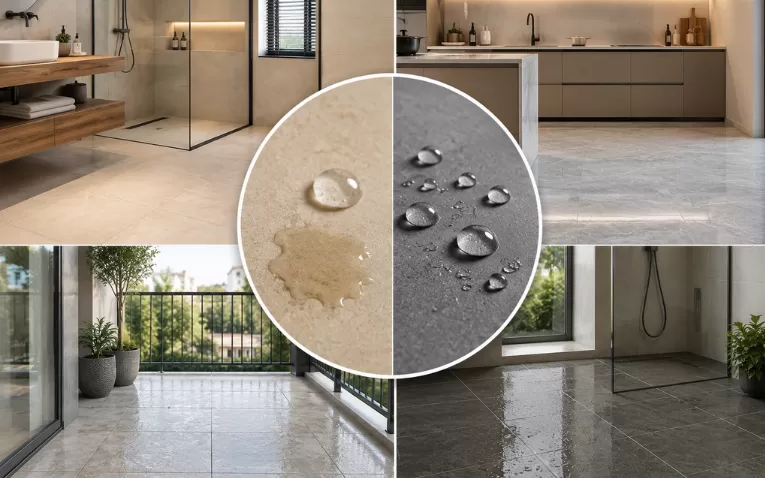
Water resistance is one of the biggest differences when comparing ceramic tile vs porcelain tile.
Ceramic Tiles
Ceramic tiles are slightly porous and absorb more water compared to porcelain tiles. While they work well for indoor walls and dry areas, they may not be the best choice for spaces with continuous moisture exposure.
Porcelain Tiles
Porcelain tiles have very low water absorption, making them highly resistant to moisture. This makes them an excellent choice for:
- Bathroom flooring
- Kitchen flooring
- Balcony areas
- Outdoor spaces
For areas exposed to water regularly, porcelain tiles are generally considered the better option.
3. Appearance and Design Options
Ceramic Tiles
Ceramic tiles offer endless design possibilities. Their glazed surface allows manufacturers to create:
- Vibrant colours
- Decorative patterns
- Textured finishes
- Modern designs
They are ideal for homeowners looking for affordable and stylish interiors.
Porcelain Tiles
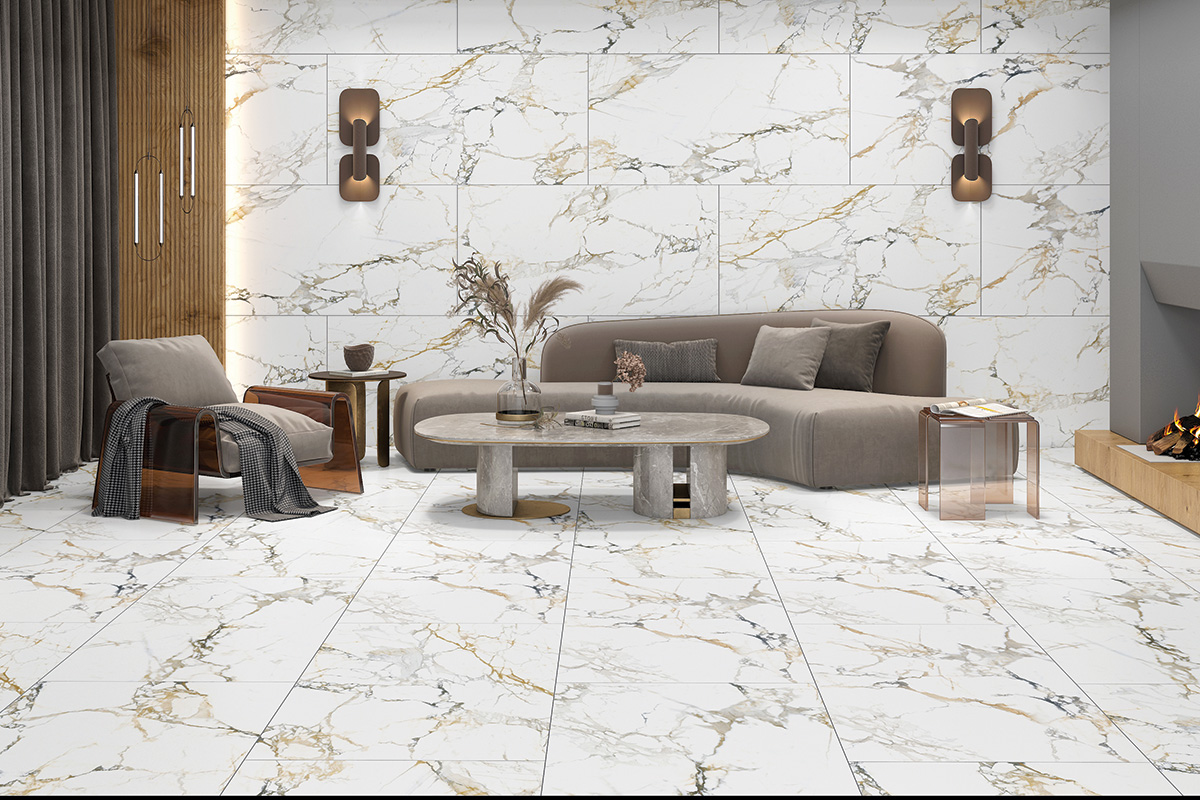
Porcelain tiles are popular for premium designs that replicate natural materials like:
- Marble
- Granite
- Natural stone
- Wood
The patterns often run throughout the tile body, helping hide minor scratches and wear over time.
4. Maintenance and Cleaning
Both ceramic and porcelain tiles are easy to maintain compared to other flooring materials.
Ceramic Tile Maintenance
Ceramic tiles can be cleaned easily with regular sweeping and mopping. However, grout lines may require occasional cleaning to prevent dirt accumulation.
Porcelain Tile Maintenance
Porcelain tiles require minimal maintenance because of their dense and stain-resistant surface. Regular cleaning with water and mild detergent is enough to maintain their appearance.
5. Installation Process
Both ceramic and porcelain tiles require proper installation for long-lasting performance.
Surface Preparation
Before installation, ensure the surface is:
- Clean
- Dry
- Even
- Free from cracks or debris
A properly prepared base helps prevent tile movement and damage.
Tile Size and Thickness
Tile size affects the overall appearance of your space.
- Large tiles create a seamless and modern look.
- Smaller tiles are suitable for detailed patterns and decorative designs.
Choose tile size based on the room dimensions and design requirements.
Ceramic vs Porcelain Tiles for Kitchen Flooring: Which is Better?
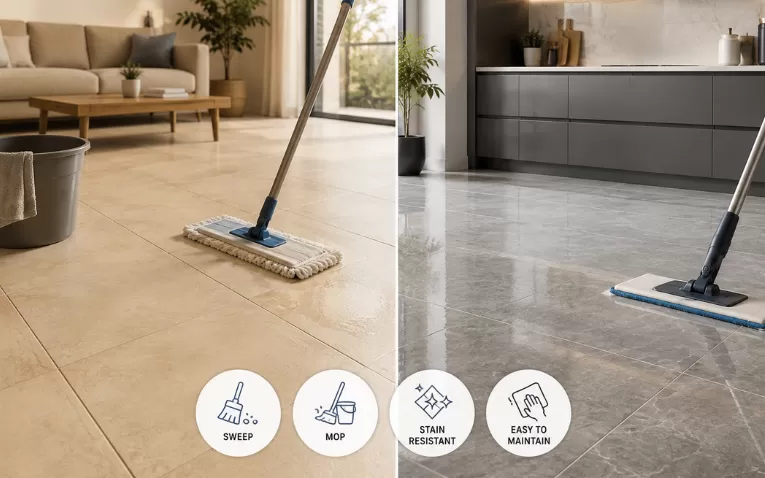
For kitchen flooring, choosing the right tiles is important. Explore Ceramic and Porcelain Tiles for Kitchen Flooring that offer excellent durability, moisture resistance, and stylish designs for modern homes.
Then continue:
Kitchens experience:
- Frequent spills
- Moisture exposure
- Heavy foot traffic
Their low water absorption and high durability make porcelain tiles more suitable for long-term kitchen use. Howev
Ceramic vs Porcelain Tiles for Bathroom: Which One Should You Choose?
Bathrooms require tiles that can handle moisture and humidity.
Porcelain tiles are recommended for bathroom floors because they provide better water resistance and slip resistance. Ceramic tiles can also be used for bathroom walls due to their attractive designs and affordability.
Which is Better: Ceramic or Porcelain Tiles?
There is no single winner between ceramic and porcelain tiles. The right choice depends on your requirements.
Choose ceramic tiles if you want:
✔ Affordable flooring solutions
✔ More design variety
✔ Tiles for walls and low-traffic areas
Choose porcelain tiles if you need:
✔ High durability
✔ Better water resistance
✔ Long-lasting flooring
✔ Tiles for high-traffic areas
For areas like kitchens, bathrooms, and outdoor spaces, porcelain tiles are generally the preferred option because of their superior performance.
Related Blogs
Types of Ceramic Tiles and Their Applications in Modern Construction
Read Now →
How to Clean Shower Tiles Properly: Step-by-Step Guide
Read Now →
How to Choose the Best Floor Tiles for Commercial Spaces
Read Now →
Choosing Tiles for Restaurants & Cafes: Aesthetic & Practicality
Read Now →Discover The Latest Kitchen Tile Innovation
Encourage users to explore or contact for bulk/dealer inquiries
View TileFrequently Asked Questions About Ceramic vs Porcelain Tile
Find answers to common questions about Ceramic vs Porcelain Tile, including differences, durability, water resistance, maintenance, and the best choice for your space..Latest Blogs
Explore—and shop—these real-life spaces.

What Is the Best Bathroom Tile Colour? 15 Stylish Ideas
Choosing the right bathroom tile colour can make a significant difference to the appearance and....
Small Living Room Ideas: How Can You Make Your Space Look Bigger?
Small living room ideas can help you create a brighter, more open, and comfortable space....
Home Flooring Tiles Design: 15 Modern Ideas for Every Room
The best home flooring tiles design combines visual appeal, durability, easy maintenance and suitability for....