













5
Quartz vs Granite Marble vs Kitchen Countertops: Which Is Best for Indian Kitchens?
A kitchen countertop is more than just a finishing element. It is the surface where ingredients are prepared, meals are cooked, appliances are placed, and everyday kitchen activities take place. Along with the countertop, kitchen tiles also play an important role in creating a practical, durable and visually appealing cooking space. That makes choosing the right countertop material an important decision for both functionality and design.
For Indian kitchens, this choice becomes even more important because countertops can be exposed to hot cookware, oil, spices, sauces, frequent cleaning and heavy daily use. Similarly, kitchen walls and floors need tiles that can handle moisture, stains and regular cleaning. This is why homeowners often compare quartz vs granite vs marble before selecting a countertop and consider how it will complement their kitchen tiles.
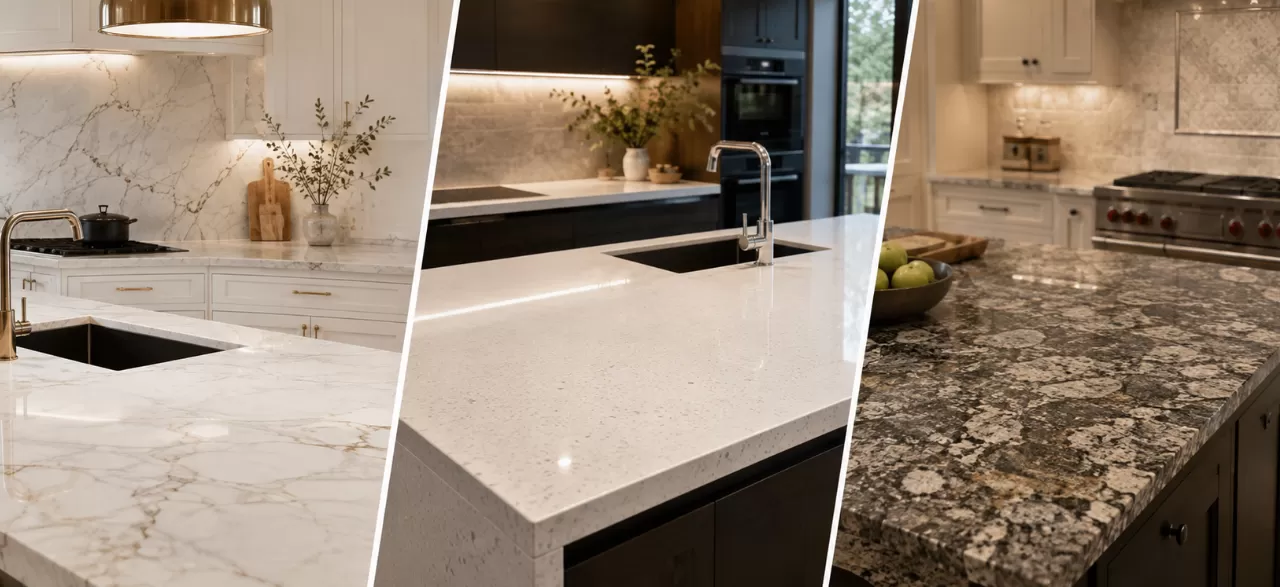
Each material offers different benefits. Marble is known for its luxurious natural appearance, granite is valued for its durability and heat resistance, while quartz offers a modern appearance with relatively easy maintenance. The right combination of countertop and kitchen tiles can also help create a cohesive kitchen design.
So, Which Is Better for an Indian Kitchen: Quartz, Granite or Marble?
Granite is generally a strong choice for heavy-use Indian kitchens because of its durability and heat resistance. Quartz is better suited to homeowners who prioritise low maintenance and stain resistance, while marble is ideal for those who prioritise luxury and natural beauty.
The best choice ultimately depends on your cooking habits, budget, maintenance preferences and kitchen design. In this guide, we compare marble vs granite vs quartz countertops based on appearance, durability, heat resistance, stain resistance, maintenance and cost, while also considering how each option works with kitchen tiles to help you choose the right combination for your kitchen.
Understanding the Difference Between Marble, Granite and Quartz
Before comparing these countertop materials, it helps to understand what they are and how they differ.
| Material | Type | Main Characteristics |
|---|---|---|
| Marble | Natural stone | Luxury appearance, unique veining and natural patterns |
| Granite | Natural stone | Durable, strong and highly resistant to heat |
| Quartz | Engineered stone | Low-porosity surface, consistent appearance and easy maintenance |
Quartz vs Granite vs Marble: Detailed Comparison
When comparing quartz vs granite vs marble, homeowners generally focus on durability, appearance, heat resistance, stain resistance, maintenance and cost.
Here is a quick comparison:
| Feature | Marble | Granite | Quartz |
|---|---|---|---|
| Appearance | Premium natural veining | Natural patterns and textures | Consistent colours and modern designs |
| Durability | Moderate | High | High |
| Heat Resistance | Good | Excellent | Moderate |
| Stain Resistance | Low to moderate | High | Very high |
| Maintenance | Higher | Relatively low | Low |
| Porosity | Porous | Lower porosity | Non-porous |
| Scratch Resistance | Moderate | High | High |
| Best For | Luxury-focused kitchens | Heavy-use kitchens | Modern, low-maintenance kitchens |
While quartz, granite and marble are commonly compared for kitchen countertops, the overall choice can also depend on how these materials compare with tiles in terms of durability, appearance and maintenance. For a broader comparison, explore our detailed guide on Tiles vs Marble vs Granite.
Which Countertop Is Best for Heat Resistance?
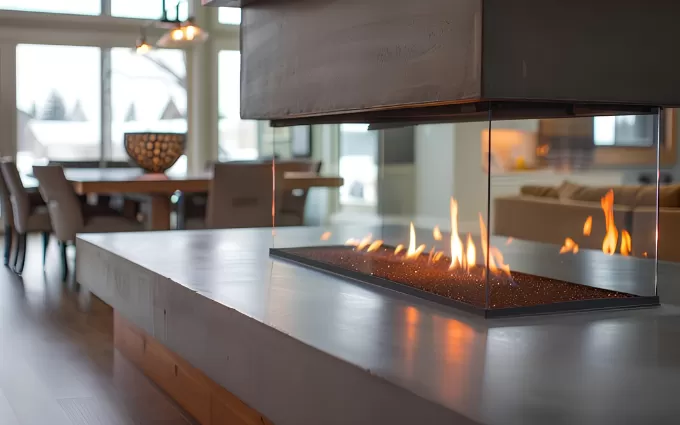
Granite is generally the preferred option when heat resistance is a major consideration. It is well suited to kitchens where hot cookware is frequently handled.
Marble also offers good heat resistance, but its porous nature means spills and acidic substances require more attention.
Quartz should be treated with greater care around very hot cookware. Using trivets or heat-resistant pads is a practical way to protect the surface.
Marble Kitchen Countertops: Luxury with Timeless Appeal
Marble has long been associated with premium interiors. Its natural veins, smooth appearance and individual patterns can give a kitchen an elegant and sophisticated look. For homeowners who want to explore marble-inspired surfaces and designs, marble tiles can also offer a stylish way to bring this timeless look into the overall kitchen design.
Every marble slab can have its own natural variation, making it attractive for homeowners who want a distinctive countertop.
Advantages of Marble Countertops
- Premium and luxurious appearance
- Unique natural patterns and veining
- Smooth and elegant finish
- Suitable for classic and contemporary kitchen designs
- Can complement premium kitchen interiors
Disadvantages of Marble Countertops
- More porous than quartz
- Requires regular care
- Can be vulnerable to staining
- More prone to scratching than harder stones such as granite
- Acidic substances can affect the surface
Tea, coffee, oil, sauces and acidic ingredients should be cleaned promptly to reduce the possibility of staining or surface damage.
Who Should Choose Marble?
Marble is a good option for homeowners who prioritise aesthetics and natural beauty over low maintenance. It can work particularly well in premium kitchens where the countertop is an important design feature.
If your kitchen sees heavy daily cooking and you want a surface that requires less attention, granite or quartz may be more practical.
Granite Countertops: A Durable Choice for Indian Kitchens
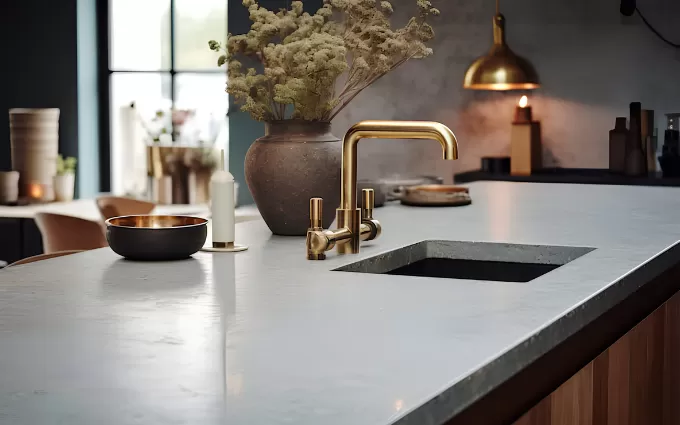
Indian kitchens can experience heavy daily use, from preparing spices and meals to handling hot cookware, oil and frequent cleaning.
Granite is popular for kitchen countertops because of its strength, durability and resistance to everyday wear.
Why Choose Granite for a Kitchen Countertop?
- Highly durable natural stone
- Excellent heat resistance
- Good resistance to everyday wear and scratches
- Available in many colours and patterns
- Suitable for busy kitchens
- Relatively easy to maintain with proper care
Compared with marble, granite generally has lower porosity, which can make it easier to maintain. Proper cleaning and care can help preserve its appearance for many years.
Who Should Choose Granite?
Granite is particularly suitable for homeowners who want a durable countertop for heavy daily cooking.
If heat resistance, long-term performance and natural stone appearance are your priorities, granite is one of the strongest options to consider.
Quartz Countertops: Modern Design Meets Convenience
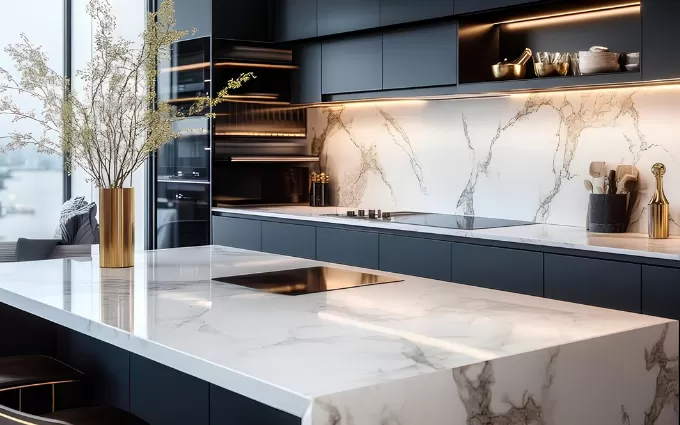
Quartz countertops have become popular in modern kitchens because they combine a contemporary appearance with relatively low maintenance.
Unlike natural stone, quartz countertops are engineered and generally have a non-porous surface. This makes them highly resistant to stains from common kitchen spills such as oil, sauces and beverages.
Benefits of Quartz Countertops
- Non-porous surface
- Low-maintenance countertop option
- High stain resistance
- Wide variety of colours and patterns
- Consistent appearance across slabs
- Works well with modern and minimalist kitchens
- Easy to clean for everyday use
What Are the Limitations of Quartz?
Quartz is not as heat-resistant as granite. Therefore, very hot cookware should not be placed directly on the countertop.
Using trivets or heat-resistant mats can help protect the surface from excessive heat.
Who Should Choose Quartz?
Quartz is a strong option for homeowners who want modern aesthetics, easy maintenance and high stain resistance.
It can be particularly suitable for contemporary kitchens where a consistent countertop colour or pattern is preferred.
Marble vs Granite vs Quartz Cost in India
Cost is another major factor when comparing marble vs granite vs quartz.
The final countertop cost depends on several factors, including:
- Material quality and grade
- Slab thickness
- Design and finish
- Size of the countertop
- Edge profile
- Sink and hob cut-outs
- Installation charges
- Transportation
- Location
- Brand or supplier
Because of these variables, there is no single fixed price for marble, granite or quartz.
| Material | Approximate Cost Range Per Sq. Ft. | Cost Level |
|---|---|---|
| Marble | ₹150–₹1,000+ | Medium to premium |
| Granite | ₹100–₹500+ | Budget to premium |
| Quartz | ₹250–₹1,500+ | Medium to premium |
Prices are indicative and can vary depending on quality, design, brand, location, installation and other project requirements.
Which Is More Affordable: Marble, Granite or Quartz?
Granite can offer strong value for homeowners who prioritise durability and everyday performance.
Quartz can involve a higher initial investment, but its low-maintenance characteristics may appeal to homeowners who want convenience.
Marble can fall into the premium category depending on the variety and finish selected, particularly when distinctive natural patterns and luxury appearance are important.
Always compare the total project cost, rather than looking only at the price per square foot.
Which Countertop Material Is Best for Indian Kitchens?
There is no universal winner when comparing quartz vs granite vs marble. The best countertop depends on how you use your kitchen.
| If You Want… | Best Choice |
|---|---|
| Luxury appearance | Marble |
| Maximum durability | Granite |
| Easy maintenance | Quartz |
| Heat resistance | Granite |
| Natural patterns | Marble |
| High stain resistance | Quartz |
| Traditional kitchen design | Granite or Marble |
| Modern minimalist kitchen | Quartz |
| Heavy daily cooking | Granite |
1. Best Overall for Heavy-Use Indian Kitchens: Granite
If your kitchen experiences frequent cooking and regular exposure to hot cookware, granite is a practical choice because of its durability and heat resistance.
2. Best for Low Maintenance: Quartz
If easy cleaning and stain resistance are your main priorities, quartz can be a convenient choice.
3. Best for Luxury Design: Marble
If the appearance of the countertop is your highest priority and you are comfortable with regular maintenance, marble offers a distinctive natural look.
Marble vs Granite vs Quartz: Which Is Easiest to Maintain?
Maintenance is one of the clearest differences between the three materials.
- Quartz generally requires the least day-to-day maintenance because of its non-porous surface and resistance to common stains.
- Granite requires relatively low maintenance, although care requirements can depend on the specific stone and whether sealing is recommended.
- Marble requires more attention because its porous surface can be more susceptible to staining and surface damage.
For busy households, quartz can be the more convenient option. For easy kitchen upkeep, learn how to clean kitchen tiles and remove grease and stains effectively
Which Is More Resistant to Stains and Scratches?
Stain and scratch resistance are particularly important for Indian kitchens.
Quartz generally offers very good stain resistance because of its non-porous surface. Granite also performs well for everyday kitchen use, while marble requires greater care around staining and scratching.
For scratches, granite is generally a durable choice. Quartz also offers good everyday scratch resistance, but no countertop should be treated as completely scratch-proof.
Using chopping boards and avoiding dragging heavy or sharp objects directly across the surface can help protect any countertop.
5 Factors to Consider Before Choosing a Kitchen Countertop
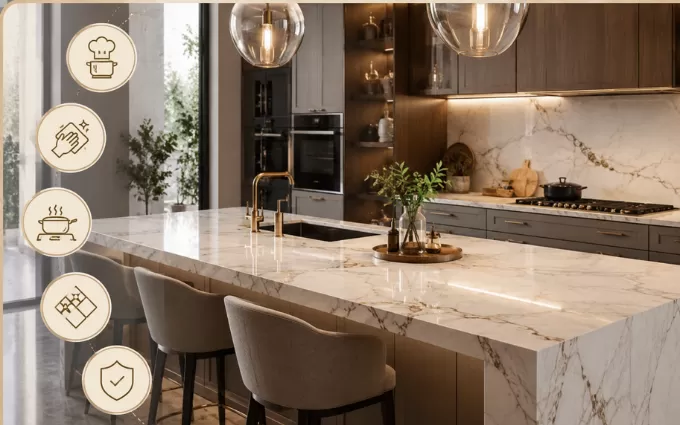
Choosing a countertop should involve more than selecting a colour or pattern. Consider these five factors before making your decision.
1. Cooking Habits
If your family cooks multiple meals every day, choose a material that can handle frequent spills, cleaning and exposure to heat.
Granite can be particularly suitable for heavy-use kitchens, while quartz is appealing when easy maintenance is important.
2. Maintenance Requirements
Think about how much time you are willing to spend maintaining the countertop.
Marble generally needs more attention, whereas quartz is designed to offer easier everyday maintenance.
3. Heat Exposure
Consider where you normally place hot cookware.
Granite is generally the stronger choice where heat resistance is a major concern. Regardless of the material, using trivets is a good practice.
4. Kitchen Design Style
Your countertop should complement your cabinets, backsplash, flooring and kitchen floor tiles. Choosing the right tile colour and finish can help create a balanced and cohesive kitchen design.
Marble can enhance luxurious interiors, granite works well across traditional and contemporary kitchens, and quartz can complement modern minimalist designs.
5. Long-Term Value
A kitchen countertop is a long-term investment. Don’t select a material based only on its initial price.
Consider:
- Durability
- Maintenance
- Appearance
- Expected usage
- Installation requirements
- Long-term practicality
A slightly higher initial investment may make sense if the material better matches your daily needs.
Can Countertops and Kitchen Tiles Work Together?
Yes. The countertop is only one part of your kitchen’s overall design.
When selecting a countertop, consider how it will work with your kitchen wall tiles, flooring, cabinets and backsplash. A balanced combination of colours, textures and finishes can make the entire kitchen feel more cohesive.
For example, a heavily patterned countertop can work well with simpler tiles, while a plain countertop can be paired with more decorative wall tiles.
The goal is to create contrast without making the kitchen feel visually crowded.
Conclusion
Choosing the right kitchen countertop is important for Indian homes, where surfaces often face heat, oil, spices, stains and heavy daily use. When comparing quartz vs granite vs marble, each material offers distinct advantages: granite is known for durability and heat resistance, quartz for low maintenance and stain resistance, and marble for its luxurious natural appearance.
For homeowners looking for quality materials for their overall kitchen design, Spenza Ceramics, recognised among the best tiles company in India, offers tile solutions that can complement different countertop materials and kitchen styles. The right combination of countertop, backsplash and kitchen tiles can create a practical, durable and visually balanced space.
In this guide, we compare quartz vs granite vs marble based on appearance, durability, heat resistance, stain resistance, maintenance and cost to help you choose the most suitable countertop for your Indian kitchen.
Related Blogs

What Is the Best Bathroom Tile Colour? 15 Stylish Ideas
Read Now →
Small Living Room Ideas: How Can You Make Your Space Look Bigger?
Read Now →
Home Flooring Tiles Design: 15 Modern Ideas for Every Room
Read Now →
Marble and Granite Difference: Find the Best for Your Home
Read Now →Choose the Right Countertop for Your Kitchen
Compare marble, quartz and granite to find a countertop that matches your cooking needs, style and maintenance preferences.
Contact UsFrequently Asked Questions About Marble vs Quartz vs Granite
Explore marble vs quartz vs granite countertops and compare their durability, maintenance, heat resistance, cost and overall suitability..
What Is the Best Bathroom Tile Colour? 15 Stylish Ideas
Choosing the right bathroom tile colour can make a significant difference to the appearance and....
Small Living Room Ideas: How Can You Make Your Space Look Bigger?
Small living room ideas can help you create a brighter, more open, and comfortable space....
Home Flooring Tiles Design: 15 Modern Ideas for Every Room
The best home flooring tiles design combines visual appeal, durability, easy maintenance and suitability for....