







1
Which Direction is Best for Tiles as per Vastu? East-Facing Guide
Tile direction as per Vastu is one of the most important yet often overlooked factors when designing an east-facing home. It directly affects how sunlight, energy, and positivity move through your space, influencing both comfort and overall well-being.
In an east-facing house, where the morning sun plays a crucial role, the right tile alignment, colour, and material can enhance brightness, improve energy flow, and create a more balanced living environment. On the other hand, incorrect tile placement or dark, heavy tones can make spaces feel dull and energetically blocked.
In this blog, you’ll get a complete guide to tile direction as per Vastu, including the ideal tile alignment for each room, the best colours to attract positivity, and the most suitable tile types for different areas of your home. We’ll also cover common mistakes to avoid and practical tips to help you choose tiles that are not just visually appealing but also Vastu-compliant and functional.
Whether you’re building a new home or renovating your current space, this guide will help you make smarter flooring decisions that support both modern design and positive living.
Why East-Facing House Vastu Is Considered Auspicious for Modern Homes
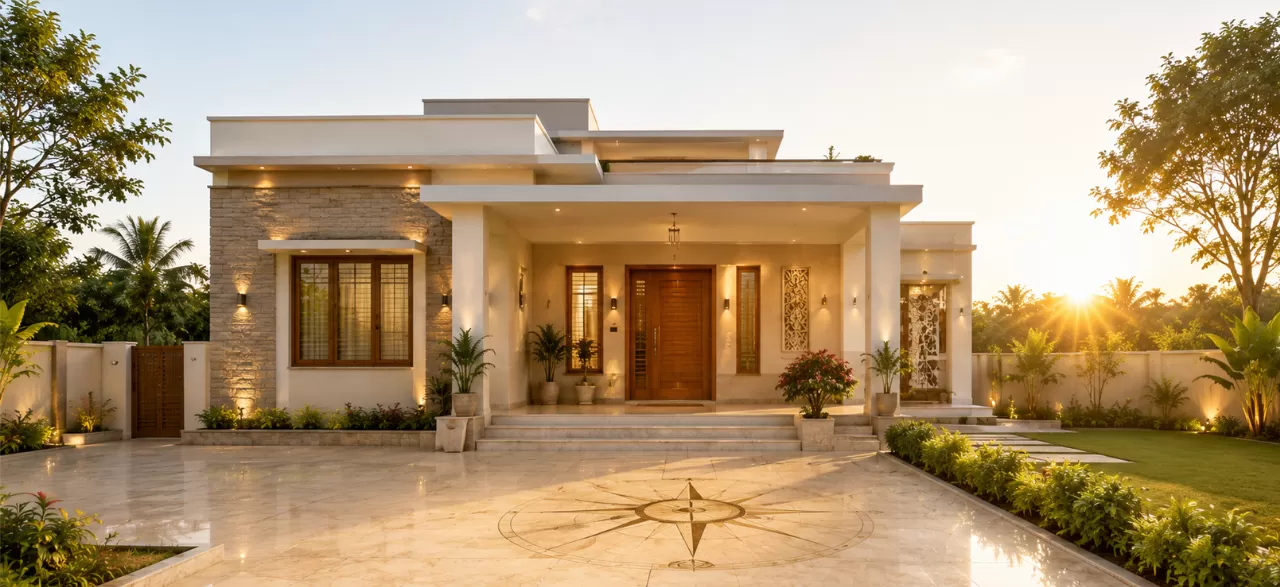
As per East-facing house Vastu, homes that face the east direction are considered highly auspicious because they receive the first rays of the rising sun. This early morning sunlight is believed to bring positive energy, clarity, and a sense of freshness into the home, making the space feel more lively and balanced.
Energy and Vitality: Natural sunlight entering from the east energises the home and creates a bright, uplifting environment.
Knowledge and Growth: In Vastu principles, the east direction is linked with wisdom, creativity, and mental clarity.
Prosperity and Positivity: It is believed to attract financial stability, peace, and harmonious relationships within the household.
However, just having an east-facing home is not enough. According to East-facing house Vastu, elements like tile direction, colour, and material also play an important role in maintaining the flow of positive energy. If tiles are not aligned properly or dark tones are overused, they can block sunlight and create imbalance, reducing the overall comfort and harmony of the space.
How Does the Tiles Influence the Flow of Energy?
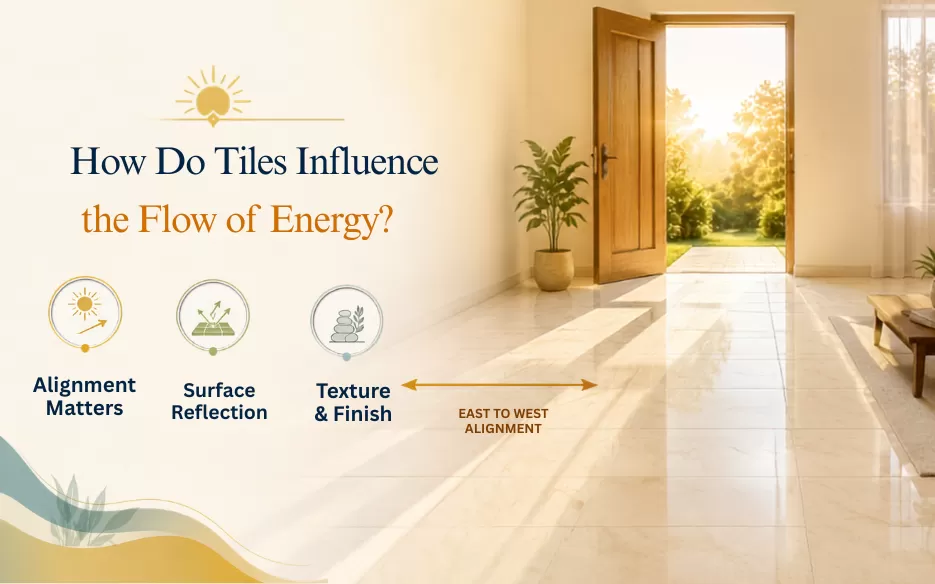
Tiles are more than just a flooring surface—they help in guiding movement, light, and air in your home. In an east-facing house:
- Alignment Matters: Tiles are laid parallel to the main entrance (east-west), which allows the sunlight to flow unobstructed.
- Surface Reflection: Light-colored tiles help in reflecting sunlight and energy, thereby amplifying positivity.
- Texture and Finish: Smooth and polished tiles promote calm energy, while rough and irregular tiles may disrupt it.
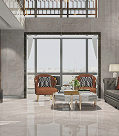
Imagine that you are entering your east-facing living room in the morning. Light cream tiles laid in an east-to-west direction will help in spreading the sunlight evenly and make the room feel brighter and more positive.
Dark or poorly aligned tiles may create uneven shadows and will also make the space feel dull and heavy.
The Direction as Per Vastu: A Room-by-Room Narrative
Well, every room in your house serves a different purpose, so the ideal tile direction, colour, and material can vary from one space to another. Mentioned below is a room-by-room guide that will help you in choosing the tiles that will seamlessly complement both the Vastu principles and the practical needs of everyday living.
| Area | Tile Alignment | Material & Texture | Colour | Scenario |
|---|---|---|---|---|
| Living Room | East–west alignment ensures smooth sunlight flow. | Polished vitrified tiles for reflection and easy maintenance. | Cream, beige, soft pastels. | Bright, welcoming space ideal for gatherings. |
| Kitchen | North–south alignment supports positive energy. | Ceramic or vitrified tiles for moisture resistance. | Beige, soft yellow. | Clean, hygienic, and energetically balanced cooking space. |
| Bedrooms | Aligned along room axis; avoid northeast heavy textures. | Smooth, matte tiles. | Pastels, light earthy shades. | Promotes relaxation and restful sleep. |
| Bathrooms & Utility | Slight slope for drainage and energy flow. | Moisture-resistant ceramic tiles. | Light shades. | Fresh, clean, and energizing feel. |
| Terrace & Balcony | Aligned to reflect sunlight evenly. | Porcelain or anti-slip textured tiles. | Terracotta, sand tones. | Calm outdoor relaxation and yoga space. |
| Parking Area | Slight outward slope for water drainage. | Heavy-duty, anti-skid parking tiles. | Dark grey, earthy tones. | Handles vehicle load while maintaining safety and durability. |
| Hallways / Corridors | Straight alignment to guide movement. | Vitrified or polished tiles. | Light neutral shades. | Creates a sense of continuity and openness. |
| Staircase | Aligned with step direction for flow. | Anti-slip textured tiles. | Medium tones to hide wear. | Ensures safety while maintaining energy movement. |
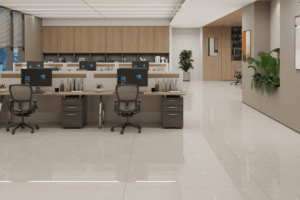
| Home Office / Study | Aligned with desk direction (east/north). | Smooth, matte finish tiles. | Light beige, off-white. | Enhances focus, clarity, and productivity. |
Best Tile Colours According to Vastu (Trending Tile Colours 2026)
Choosing tile colours isn’t just about matching your furniture or keeping up with trends. It actually changes how your home feels the moment you walk in. Some colours make a space feel open, fresh, and welcoming, while others can make it feel slightly heavy without you even realizing why.
That’s exactly why Vastu gives so much importance to colour selection. And interestingly, if you look at the trending tile colours for 2026, they’re moving in the same direction towards softer, natural, and more calming shades that make a home feel balanced and comfortable.
If your home gets good sunlight (especially east-facing ones), lighter colours just make everything feel better.
- Light shades always feel right
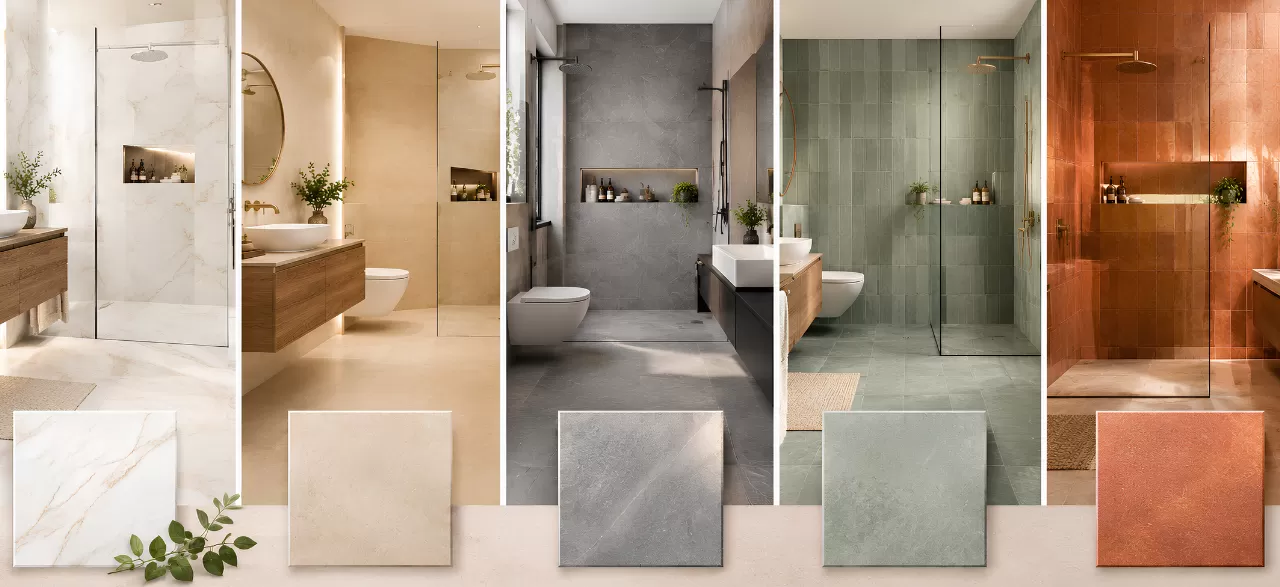
Colours like white, cream, or beige never really go out of style. They reflect sunlight nicely and make even small rooms look bigger. You’ll notice the space feels calmer too. - Earthy tones add warmth
If plain light colours feel too simple, you can go for light browns or sand shades. They give a slightly warm, grounded feeling without making the space look dark. - Pastel colours are becoming popular
Soft greens, light blues, or even a hint of peach are being used more now. They don’t overpower the room but still add a bit of personality. - Marble-look tiles for a clean finish
A lot of people are going for subtle marble designs these days. They look premium but still keep the space bright and balanced. - Glossy vs matte—it depends on your vibe
Glossy tiles reflect more light, so they work well if you want brightness. Matte finishes feel softer and more relaxed. There’s no strict rule here. - Too many dark colours can feel heavy
Dark grey or black tiles can look stylish in photos, but in real homes, they sometimes make spaces feel smaller or dull. It’s better to use them in small portions. - Mixing works better than overthinking
You don’t have to stick to one colour everywhere. A simple base with slight variation usually looks more natural and less forced.
At the end of the day, the “right” colour is the one that makes your home feel comfortable when you live in it—not just when you see it in a catalogue.
Different Types of Vastu Shastra Tiles
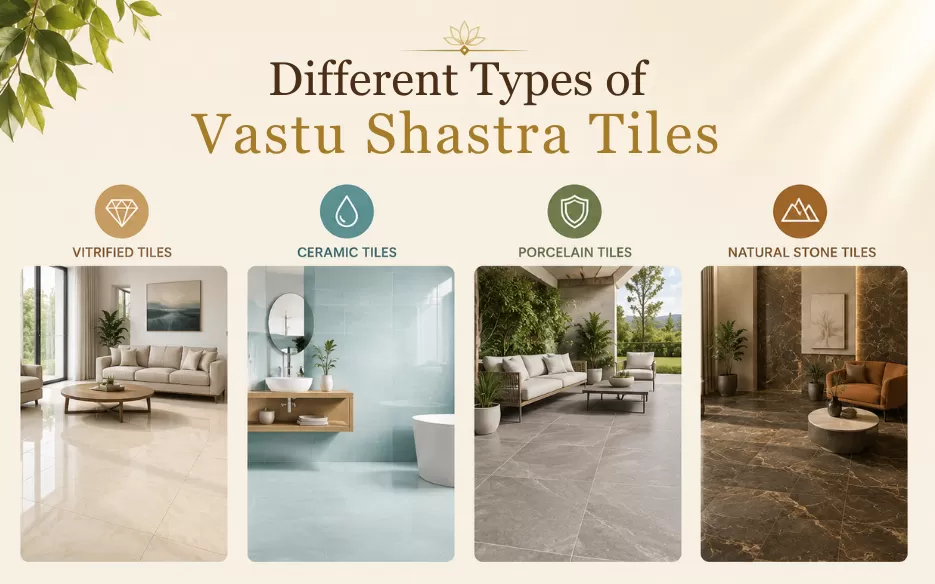
Vastu Shastra tiles are not only about colour or direction, but they are also about choosing the right material for the space. The right type of tile can support durability, comfort, light flow, and a well-balanced home environment.
Vitrified Tiles
When selecting tiles as per Vastu, it’s not just about the colour but also the type of tile you choose, as each one plays a different role in your home. Vitrified tiles are known for being durable and low-maintenance, which makes them a practical choice for living rooms, hallways, and other central areas. They also reflect sunlight well, helping the space feel brighter and more positive throughout the day.
Ceramic Tiles
For areas like kitchens and bathrooms, ceramic tiles work really well because they are moisture-resistant and easy to clean. If you go for lighter shades, they naturally create a sense of calmness and balance, which is exactly what these functional spaces need.
Porcelain Tiles
When it comes to outdoor or semi-open spaces, porcelain tiles are often preferred. They are extremely strong and can handle changing weather conditions, making them ideal for terraces and balconies. At the same time, they help maintain a steady flow of energy without getting affected by harsh sunlight.
Natural Stone Tiles
Natural-stone tiles are unique and offer a luxurious and earthy appeal to your space. Shades like Basalt Gris and Alicante Brown align well with Vastu for premium spaces.
Practical Tips and Common Mistakes
Well, choosing Vastu tiles is not only about selecting a visually appealing colour or premium finish. Minor details like tile direction, pattern, texture, and placement can also impact how open, bright, and balanced a space feels.
- You should avoid dark coloured tiles in the northeast corners, as this zone is generally associated with openness, clarity, and a positive flow of energy. Lighter shades like cream, beige, white, and soft pastels work better here.
- Secondly, you should align your tiles as per the room’s axis and not place them randomly. After all, proper alignment will ensure that the room looks organised and also allow the natural light to move more smoothly throughout the space.
- You should not only focus on aesthetics. Beautiful tiles should also be durable, easy-to-clean, and moisture-resistant.
- The reflection of the sunlight should also be taken into account, especially if your house is east-facing. Tiles that are light-colored and reflective will make your room brighter and more spacious.
Wrapping Up
Choosing the right tiles for an east-facing house Vastu is important for balancing positivity, energy, and overall aesthetics. Paying close attention to tile direction as per Vastu, selecting the right colours, and choosing suitable materials can make a noticeable difference in how your home feels every day. It helps ensure a harmonious flow of energy, better sunlight utilisation, and long-term comfort.
From living rooms and kitchens to bedrooms and terraces, following these essential guidelines for an east-facing house Vastu can enhance not just the visual appeal of your space but also the sense of well-being and positivity within your home.
When selecting a reliable tiles company in India, it’s important to choose a brand that understands both design trends and practical needs. For homeowners looking for premium, Vastu-compliant tiles, Spenza Ceramics offers a perfect blend of style, durability, and functionality. With a wide range of elegant designs, trending colours, and high-quality finishes, Spenza Ceramics helps you create spaces that are modern, comfortable, and aligned with positive energy.
Related Blogs

What Is the Best Kitchen Direction as per Vastu?
Read Now →
Toilet Direction as Per Vastu: Best Placement, Tips And Common Mistakes
Read Now →Transform Your East-Facing Home with Vastu-Perfect Tiles
Find the perfect tile colours, direction, and materials based on Vastu create a balanced, bright, and harmonious home today.
Contact UsFAQs on Tile Selection as per Vastu for East-Facing Houses
Simple answers to help you choose the right tile colours, materials, and directions for better energy and positivity..
What Is the Best Bathroom Tile Colour? 15 Stylish Ideas
Choosing the right bathroom tile colour can make a significant difference to the appearance and....
Small Living Room Ideas: How Can You Make Your Space Look Bigger?
Small living room ideas can help you create a brighter, more open, and comfortable space....
Home Flooring Tiles Design: 15 Modern Ideas for Every Room
The best home flooring tiles design combines visual appeal, durability, easy maintenance and suitability for....