








4
Double Charge Vitrified Tiles vs. GVT Tiles: Which One Should You Choose?
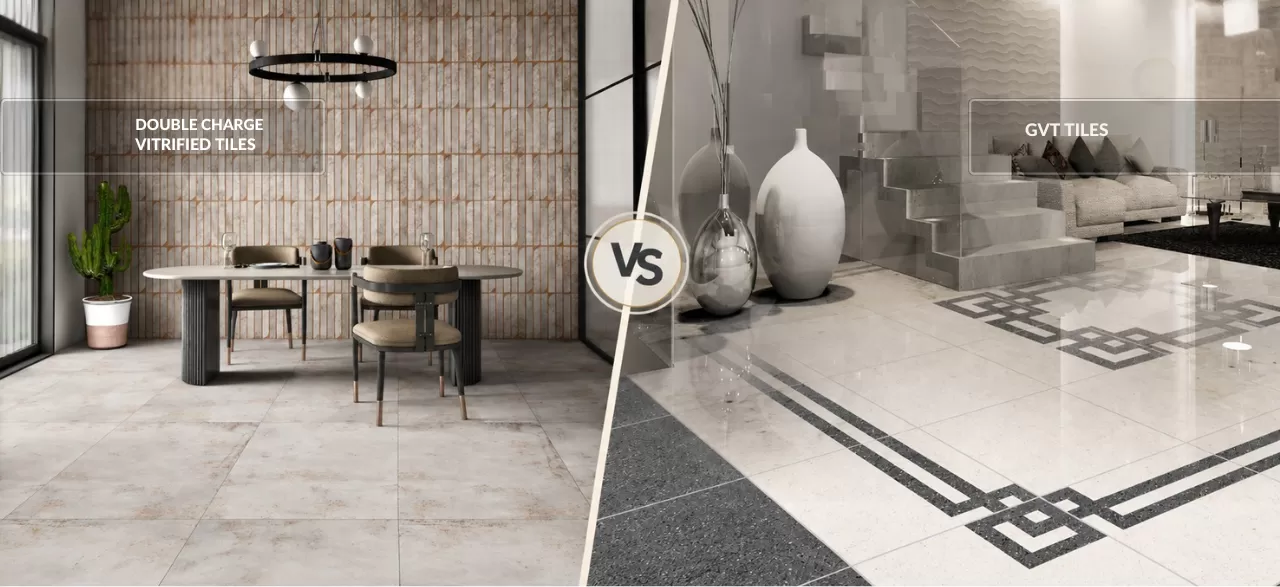
When it comes to flooring, your choice of tiles can define both the style and functionality of a space. In India, the 2 most popular options are double-charged vitrified tiles and GVT tiles. But each type has its own unique features, which makes it important to understand the differences between the two tiles before investing.
Therefore, a proper vitrified tiles comparison will help you in choosing the flooring that will seamlessly balance design, durability, and budget.
Whether you’re designing a home interior or planning to redefine a commercial space, this guide will explore all the key differences in detail and help you make a confident decision.
Composition and Manufacturing Process
Double-charged vitrified tiles are designed using a double-layer pressing process. In this method, the base layer consists of high-quality clay and minerals, while the second layer is made using coloured materials that are embedded within the design. This ensures that both the pattern and the colour seep in deeply through the tile, rather than sit on the surface.
On the other hand, GVT tiles are made from a single vitrified layer and a decorative glazed surface. Though the decorative glaze can easily produce designs and patterns in HD quality, it sits on the surface and may wear out, especially in high-traffic areas.
Verdict: Double-charged tiles will be a better choice for high-traffic spaces, as their design and durability will remain intact. On the other hand, GVT is better suited for areas where style and aesthetic appeal are the top priorities.
Design and Aesthetic Versatility
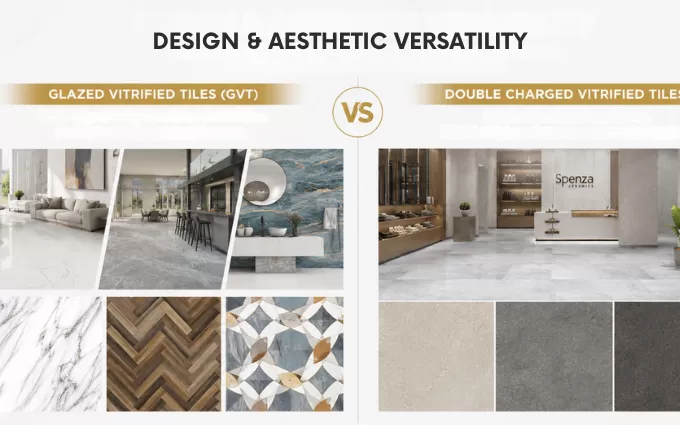
On the design and aesthetic versatility front, glazed vitrified tiles take the lead in terms of the variety they offer. They can easily copy the look of wood, marble, stone, and abstract patterns and are available in glossy, matte, and textured finishes. Flexibility of this kind makes them an ideal option for residential interiors where style and decor variety matter a lot.
Though double-charged vitrified tiles are expensive, they have limited design options. There is a possibility that they might replicate the natural stone or marble pattern, thereby providing subtle aesthetics rather than flashy textures and patterns.
Verdict: When working on a creative residential or a decorative project, GVT tile designs are the preferred choice. However, for commercial spaces, double-charged vitrified tiles provide a refined look with lasting durability.
Durability and Wear Resistance
Durability is one of the most important considerations in flooring. Double-charge vitrified tile designs excel in this due to their dual-layer pressing and embedded colour. As a result, the surface can easily resist scratches, heavy foot traffic, and impact without affecting its surface.
GVT tile designs, on the contrary, depend on the glazed surface for protection. In spaces with heavy foot traffic, the glazed surface can wear over time, which in turn reduces its shine and visual appeal.
Verdict: For high-traffic spaces like malls, schools, offices, or public spaces, double-charged vitrified tiles are the best option. However, GVT is a practical choice for low-traffic areas where beauty matters more than long-term strength.
Thickness, Strength, and Weight
Premium-quality double-charged vitrified tiles are thicker and denser due to the double-layer processing process. As a result, this makes them capable of handling higher loads and impacts without cracking. Additionally, this weight and density also contribute to the overall stability and resistance to wear.
Glazed vitrified tiles, being thinner with a single vitrified base, make them lighter and easier to handle. Though they are a good option for homes and light commercial spaces, they may not be able to perform well under continuous heavy weight.
Verdict: When compared based on strength and structural ability, double-charged vitrified tiles have an advantage over the GVT tile designs that will suit residential spaces where extreme durability is not a concern.
Traffic Suitability
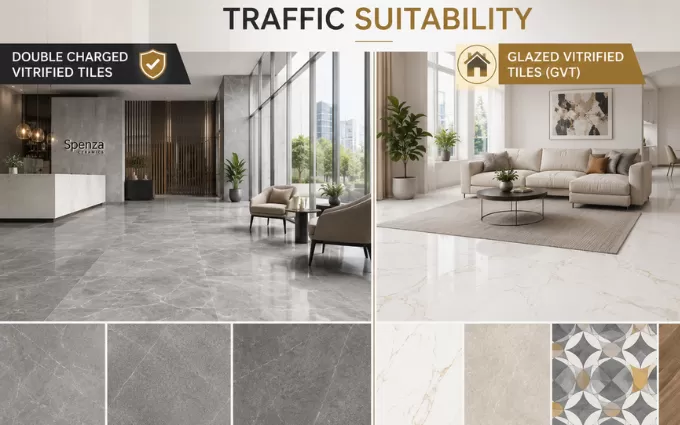
As already mentioned above, for heavy foot traffic, double-charged vitrified tiles are the go-to option. Their embedded design and dense composition make them resistant to scratches, chips, and even dulling.
Though GVT tile patterns are visually appealing, they will look better in spaces where there is moderate traffic.
Verdict: Dual-charged vitrified tiles shine on the stage as they can easily dominate in high-traffic spaces, while GVT tiles are perfect for residential or low-traffic commercial areas.
Maintenance and Cleaning
Both tile types require low maintenance; however, the differences still exist depending on the usage. Dual-charged vitrified tiles are easier to maintain, as the embedded design is not affected by scratches or wear. Occasional sweeping and mopping are more than sufficient.
GVT tiles, particularly with glossy finishes, may require extra care to retain their original shine. Though they are easy to clean, heavy usage can lead to scratches that will show up on the glazed surface.
Verdict: For minimal maintenance in busy spaces, double-charged vitrified tiles will dominate. GVT will be a perfect choice when design variety is more valued than durability and resilience.
Water and Stain Resistance
Both tile options are non-porous, which means that they offer excellent resistance to water and stains. But when it comes to the GVT tile patterns, the glazed layer provides the protective functionality. In case the glaze wears off over time, water and dirt can easily affect the surface.
With their colour and pattern running throughout, double-charged vitrified tiles offer resistance even as the surface experiences water.
Verdict: Double-charged tiles can maintain uniform performance in high-traffic, moisture-prone areas, while GVT will be a perfect choice for spaces like kitchens, bathrooms, and moderate-use spaces.
Cost Consideration
Double-charged tiles are more expensive due to their manufacturing process, durability, and commercial suitability. This is an investment, especially when you are looking at long-term performance and minimal maintenance.
But GVT tile designs are more budget-friendly and widely used, which makes them a suitable option for various residential projects where design versatility and affordability are important.
Verdict: Glazed vitrified tiles will be a better option for the cost-conscious consumer projects, and double-charged tiles will be worth the investment for high-traffic commercial projects.
Wrapping Up
Choosing the right flooring requires striking a perfect balance between aesthetics, durability, and functionality. While GVT tiles offer versatile designs, glossy finishes, and a wide range of textures, they are an ideal choice for moderate-traffic spaces.
In contrast, double-charged vitrified tiles stand out for their robust strength, scratch resistance, and long-lasting performance, making them perfect for commercial and high-traffic areas.
For homeowners and businesses searching for the best tiles company in India, Spenza Ceramics offers a premium range of tile options in both categories—ensuring superior quality, elegant designs, and lasting durability.
By understanding the key differences and aligning them with your space requirements, you can confidently choose flooring that delivers both style and practicality for years to come.
Related Blogs
What Is the Best Bathroom Tile Colour? 15 Stylish Ideas
Read Now →
Small Living Room Ideas: How Can You Make Your Space Look Bigger?
Read Now →
Home Flooring Tiles Design: 15 Modern Ideas for Every Room
Read Now →
Marble and Granite Difference: Find the Best for Your Home
Read Now →Explore Double Charge & GVT Tiles – Choose the Perfect Fit Today
Contact UsFrequently Asked Questions
Get quick answers to common queries about ceramic tiles, including selection, usage in wet areas, durability, and maintenance tips..
What Is the Best Bathroom Tile Colour? 15 Stylish Ideas
Choosing the right bathroom tile colour can make a significant difference to the appearance and....
Small Living Room Ideas: How Can You Make Your Space Look Bigger?
Small living room ideas can help you create a brighter, more open, and comfortable space....
Home Flooring Tiles Design: 15 Modern Ideas for Every Room
The best home flooring tiles design combines visual appeal, durability, easy maintenance and suitability for....