











1
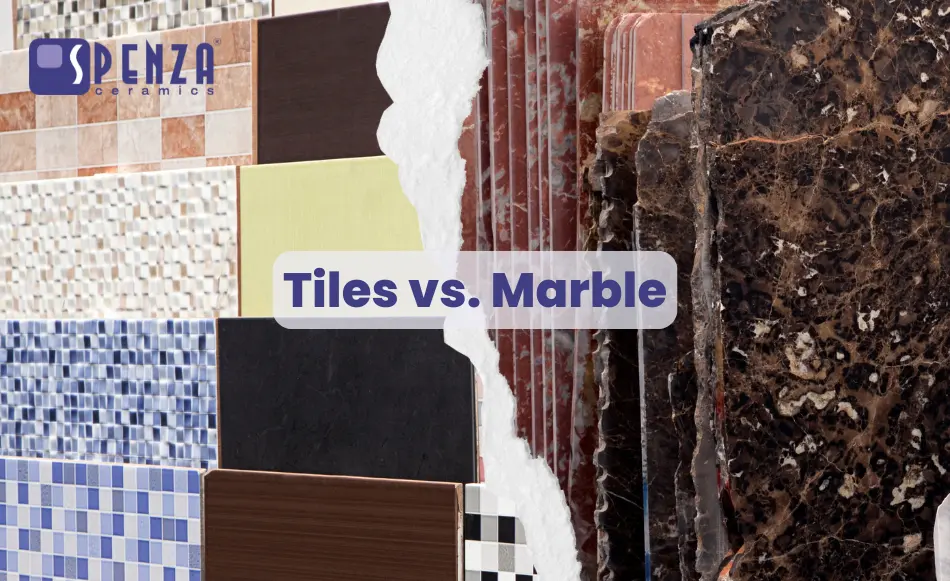
Tiles vs. Marble: Which Flooring Option Is Better For Modern Spaces?
The floor is the first thing that catches a person’s attention every time they step into a newly designed space. Sometimes, it’s cool and feels chilling underfoot, at times, it’s warm, and we can feel the texture of the flooring. If you are an architect, interior designer or tile dealer, you must have faced the dilemma of choosing a material for flooring, which is better – marble or tiles?
Bringing the absolute best in the floors is a tough task, but if you difference between marble and tiles, this becomes relatively easy. Let’s take a look at these classic flooring options, weighing their pros and cons for residential and commercial spaces.
Aesthetics And Visual Appeal
Visual aesthetics are always the primary element of any flooring, be it a residential setting or a commercial showroom.
A. Marble—The Classic Luxury
Marbles are the Rolls-Royce of flooring. Firstly, it’s natural, which adds to its beauty, and each slab tells its own timeless tales with unique veins and patterns. A marble flooring exudes a grandeur that makes the space look royal. This makes it a preferred flooring material in luxury homes, hotels, and high-end commercial spaces. No two pieces of marble are ever the same, which is both charming and challenging when it comes to installation.
B. Tiles—Modern Versatility
Tiles are also somewhat like chameleons as they can mimic the visual appeal of any texture, or material, and have endless colour options. These are the perfect flooring options for modern spaces that demand a fusion of vibrant colours and elusive textures. Plus, as tiles are digitally printed, they have a consistent pattern which comes out beautifully when installed with perfection.
Related Blogs
Guide to Choosing Parking Tiles: Space, Design, and Material
Read Now →
Best Kitchen Tile Colour Combinations for Walls and Floors
Read Now →
Modern Ideas for Bedroom Tile Designs for Floors and Walls
Read Now →
Complete Guide to Elevation Tiles for Modern Exteriors
Read Now →Durability and Maintenance
Now that we have discussed the aesthetics side, let’s jump into the practical side of both of these flooring options.
A. Marble—Strength with Strings Attached
Ever wondered why heritage buildings stood the test of time? It’s because of these marbles used in the floor and other structures. Marble is strong, there’s no doubt about that, but it is porous also. Apart from this, marble also needs regular polishing to maintain its shine and gets easily scratched or stained.
B. Tiles—Low Maintenance, High Performance
Tiles are built for real life. They’re scratch-resistant, and stain-resistant, and don’t need much pampering. Spilled curry? No problem. Muddy footprints? Easy wipe. Most tiles, especially porcelain and vitrified varieties, are non-porous, so they won’t absorb moisture or stains. This makes tiles a top pick for kitchens, bathrooms, and commercial spaces with heavy foot traffic. Plus, tiles rarely need more than a sweep and mop to stay looking fresh. If you’re after flooring that just gets on with the job, tiles are your friend.
Short-Term and Long-Term Cost Considerations
Let us take a look at the cost of both types of flooring to determine how it impacts the budget required for a specific area.
A. Marble—Luxury Comes at a Price
Let’s not sugar-coat it: marble is expensive. The cost isn’t just in the material itself, but also in extraction, transport, and installation. And if you want premium varieties like Italian marble, the price can skyrocket. Maintenance costs add up, too, like regular sealing, polishing, and the occasional repair.
B. Tiles—Affordable and Predictable
Tiles are much kinder to the wallet. They’re man-made, mass-produced, and available in a wide range of price points. Whether you’re working on a budget project or a luxury build, there’s a tile for every space. Installation is quicker and less wasteful, and because tiles are durable, long-term costs are minimal. If a tile does get damaged, you can usually replace just that piece, not the whole floor.
Discover The Top Tile Company In India
Encourage users to explore or contact for bulk/dealer inquiries
Contact USComfort and Safety—What’s It Like to Live With?
There’s a safety element attached to flooring also – a non-slip surface and comfort. Let’s see how these marbles and tiles perform in the safety parameter.
A. Underfoot Feel
Marble stays cool, which is a blessing in hot climates. Walking barefoot on marble on a summer day? Bliss. Tiles also tend to stay cool, but some people find them a bit harder underfoot compared to marble. If comfort is a priority, opt for larger tiles with minimal grout lines for a smoother feel.
B. Slip Resistance
Freshly polished marble can be slippery. This can be a concern in homes with kids or elderly residents. Matte finishes can help, but tiles generally offer better slip resistance, especially those designed for wet areas.
Installation and Flexibility
Tiles win hands down when it comes to installation. They’re lighter, easier to cut, and create less waste. Marble is heavier, trickier to work with, and usually results in more wastage due to its natural veining and the need for precise matching. For large residential projects or renovations on a deadline, tiles are one of the best flooring options for the home.
So, Marble or Tiles—Which Is Better for Modern Spaces?
Here’s the honest answer: it depends. If you want timeless luxury, are willing to invest in maintenance, and crave a one-of-a-kind look, marble is hard to beat. But if you’re after flexibility, durability, low maintenance, and value, tiles are the clear winner for most modern spaces.
For architects, builders, and contractors working on contemporary projects, tiles offer the best blend of style, practicality, and sustainability. They’re perfect for busy homes, retail spaces, and offices that need to look sharp without constant upkeep. You can even get tiles that mimic the look of marble, so you get the best of both worlds.
Final Thoughts
Choosing the best flooring option for your project isn’t just about looks—it’s about how we live, work, and move through the space. Tiles vs Marble Flooring isn’t a simple this-or-that decision. It’s about matching the right material to the space needs, budget, and design vision.
If you’re still on the fence, why not explore the range of innovative tiles at Spenza Ceramics? We’re here to help you find the perfect fit for your next project—whether you’re designing a sleek modern home, a bustling office, or a chic retail space.
Common Queries
Explore—and shop—these real-life spaces..Latest Blogs
Explore—and shop—these real-life spaces.
Guide to Choosing Parking Tiles: Space, Design, and Material
Introduction Today, modern-day homes and commercial spaces are not designed for concrete parking areas. In....
Best Kitchen Tile Colour Combinations for Walls and Floors
Introduction: Why Kitchen Tile Colour Matters? The kitchen is one of the most functional spaces....
Modern Ideas for Bedroom Tile Designs for Floors and Walls
Introduction: Why Bedroom Tile Design Matters? Bedroom tile designs play an important role in defining....